Estimated reading time: 14 minutes
Table of Contents
You've invested in small business SEO, hired someone to handle it, or rolled up your sleeves to do it yourself. Now comes the hard part: waiting. You check your Google rankings every few days, maybe every few hours if you're being honest, and... nothing. Still buried on page three. The temptation to panic, pivot, or abandon ship entirely starts creeping in.
Here's what most business owners don't realize: rankings are actually one of the last things to move when SEO starts working. It's counterintuitive, I know. We've been conditioned to think that climbing search results is the only metric that matters. But in reality, meaningful changes happen beneath the surface first, shifts in how people find you, engage with your site, and ultimately become customers. These early SEO wins are often more valuable than a position jump from #47 to #32.
The challenge? Knowing what metrics show SEO is working before rankings materialize. Without understanding these early indicators, you might kill a strategy that's actually gaining traction, or worse, keep pouring money into something that's genuinely failing.
In this article, we'll walk through five concrete signs that your SEO efforts are paying off, signs you can measure and track right now, even if your rankings haven't budged. These aren't vanity metrics or wishful thinking. They're real business signals that consistently appear before ranking improvements, and they'll help you make smarter decisions about your SEO investment.
Why Small Business Owners Feel Lost in the SEO Waiting Game
You've invested in small business SEO, maybe hired someone, published content, fixed technical issues, and now you're staring at your analytics dashboard wondering if any of it actually matters. The rankings haven't budged. Your site still sits on page three for your most important keywords. And that nagging question keeps surfacing: is this working at all, or are you just burning money?
This frustration is universal among small business owners, and it stems from a fundamental disconnect in how SEO success is measured. Most people expect immediate ranking improvements, but the reality is far more nuanced. Search engine optimization operates on timelines that feel agonizingly slow compared to other marketing channels. Where a Facebook ad might generate clicks within hours, small business SEO typically requires three to six months before meaningful ranking changes appear, and for competitive industries, that timeline extends even further. The problem isn't that your SEO isn't working; it's that you're looking for the wrong signals at the wrong time.
When does SEO start showing results? The answer depends entirely on what "results" means to you. If you're fixated exclusively on first-page rankings, you'll miss the dozens of positive indicators that emerge much earlier. In practice, effective small business SEO generates measurable improvements within weeks, just not the improvements most business owners expect. Your site might be gaining authority, attracting more qualified visitors, and building the foundation for future ranking success, but these wins remain invisible if you're only checking your position for a handful of target keywords. According to industry research on SEO metrics, the most successful businesses track a broader range of performance indicators that reveal progress long before rankings shift.
Understanding how long does small business SEO take for success requires reframing your expectations entirely. Think of SEO as compound interest for your online presence: the early deposits feel insignificant, but they're accumulating value that will eventually produce dramatic returns. The businesses that abandon their SEO efforts after two months, convinced nothing is happening, often quit just before the inflection point where all that groundwork begins paying dividends. Meanwhile, competitors who stay the course and learn to recognize early progress signals maintain momentum through the waiting period and emerge with sustainable traffic growth that paid advertising simply can't replicate.
The key to surviving the SEO waiting game isn't blind faith or patience alone. It's developing the literacy to read early signals correctly, understanding which metrics actually predict future success, and knowing what healthy progress looks like before your rankings reflect it. When you know what to look for, the waiting game transforms from anxious uncertainty into confident monitoring of measurable, meaningful improvements.
The 5 Early Signals That Prove Your SEO Investment Is Paying Off
Sign #1: Your Search Impressions Are Climbing (Even on Page 3)
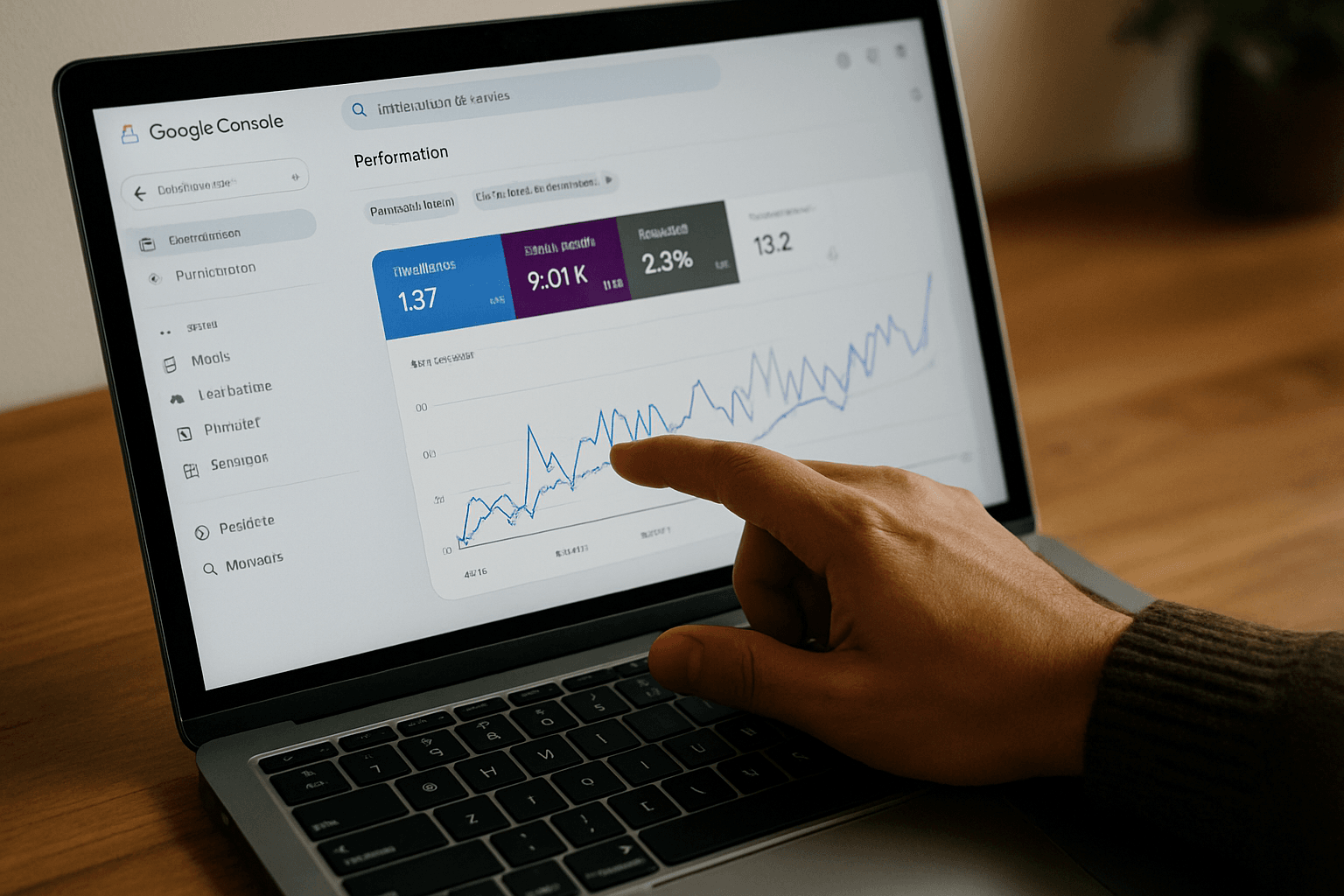
Open Google Search Console and navigate to the Performance report. You might not be ranking on page one yet, but if your impressions, the number of times your site appears in search results, are trending upward, you're witnessing the first concrete evidence that your small business SEO is gaining traction. This metric reveals something crucial: Google is beginning to consider your site relevant for more queries, even if you're not yet ranking high enough to capture many clicks.
Impressions growth typically precedes ranking improvements by several weeks or even months. When you publish optimized content, improve your site structure, or build quality backlinks, Google doesn't immediately vault your pages to position one. Instead, the algorithm begins testing your pages in search results, showing them to users at lower positions to gauge relevance and engagement. If you're seeing impressions increase from 500 per month to 2,000 per month, even while your average position hovers around 25, that's not failure. That's Google expanding the range of queries for which your site appears, gathering data on how users respond to your listings, and building the statistical foundation that will eventually support higher rankings.
The beauty of tracking impressions as an early SEO win is that it's completely objective and immune to the daily fluctuations that make rank tracking so anxiety-inducing. You're not guessing or hoping, you're watching Google's algorithm actively increase your site's visibility across more search queries. In practice, businesses that see sustained impression growth over 4-8 weeks almost always see corresponding ranking improvements follow, because impressions represent Google's growing confidence in your content's relevance. Filter your Search Console data by specific pages or query categories to identify exactly which content is gaining traction, then double down on those topics with additional supporting content that reinforces your topical authority.
Sign #2: Click-Through Rates Are Improving Without Ranking Changes
Here's a fascinating phenomenon that reveals genuine SEO progress tracking: your click-through rate (CTR) from search results improves even when your rankings stay relatively flat. This happens when your title tags, meta descriptions, and overall listing presentation become more compelling to searchers. If you're ranking in position 8 but your CTR jumps from 2% to 4%, you've effectively doubled your traffic from that position, a tangible business result that has nothing to do with climbing the rankings.
Improving CTR signals several positive developments simultaneously. First, it demonstrates that your messaging resonates with your target audience, they're choosing your listing over competitors' listings that appear in similar positions. Second, it creates a virtuous cycle: Google's algorithm notices that users prefer your listing, which contributes to future ranking improvements. Third, and most importantly for immediate business impact, higher CTR means more visitors and more opportunities for conversions, regardless of your current ranking position. According to research on SEO KPIs, click-through rate improvements often deliver more immediate business value than ranking changes, because they represent genuine user preference rather than algorithmic positioning.
To leverage this early signal, analyze which pages show CTR improvements in Google Search Console, then identify what makes those listings work. Did you add numbers to your title? Include emotional triggers or specific benefits? Use structured data that displays rich snippets? Reverse-engineer your own successes and apply those principles to other pages. For small businesses, a systematic approach to optimizing titles and descriptions across your entire site can deliver measurable traffic increases within weeks, long before your rankings catch up. This is SEO progress tracking at its most actionable: you're not waiting for Google to rank you higher; you're actively capturing more of the traffic that's already available at your current positions.
Sign #3: Visitors Are Actually Engaging With Your Content
Traffic numbers alone tell an incomplete story. The real early indicator of SEO success lives in engagement metrics: time on page, pages per session, scroll depth, and bounce rate. When your organic visitors start spending three minutes on your content instead of thirty seconds, viewing multiple pages instead of immediately leaving, and scrolling to read your entire articles, you're witnessing proof that your SEO is attracting the right audience, people who genuinely care about your topic and consider your content valuable.
This distinction between traffic quantity and traffic quality represents one of the most critical concepts in small business SEO. You can technically "succeed" at driving traffic while completely failing to attract visitors who matter to your business. Maybe your content ranks for tangentially related queries that bring curious visitors who quickly realize you're not what they need. Or perhaps your titles over-promise and under-deliver, creating high CTR but immediate disappointment and exits. Neither scenario helps your business. Engaged traffic, however, indicates alignment: the people finding you through search are the people you actually want to reach, and your content delivers on the promise your search listings make.
Google's algorithm pays close attention to engagement signals when determining whether to maintain or improve your rankings. If users consistently engage with your content, reading thoroughly, clicking internal links, returning to your site for additional pages, Google interprets this as confirmation that your content deserves its current position or possibly a better one. Conversely, if users consistently bounce back to search results immediately after landing on your page, Google questions whether your content truly satisfies the search intent. Track these metrics in Google Analytics by comparing engagement rates between organic traffic and other channels. If your organic visitors show equal or better engagement than direct traffic or referrals, your small business SEO is successfully attracting qualified, interested prospects. This early win often appears weeks before ranking improvements, giving you confidence to maintain your SEO investment during the waiting period.
Sign #4: People Are Searching for Your Business Name
One of the most gratifying early signals of effective SEO is the emergence of branded search volume, people typing your business name directly into Google. This metric indicates that your SEO efforts are creating awareness beyond immediate search results. Potential customers encounter your content through organic search, remember your brand, and later return by searching specifically for you. This progression from discovery to brand recall represents the beginning of genuine market presence.
Branded search volume increases signal several positive developments. First, they demonstrate that your content makes a memorable impression, visitors don't just consume your information and forget you; they retain your brand identity. Second, branded searches convert at dramatically higher rates than generic searches, because these visitors already have some familiarity with your business and are actively seeking you out. Third, growing branded search creates a competitive moat: as more people search for your business by name, your brand becomes more prominent in Google's understanding of your market, which can indirectly support rankings for non-branded terms as well.
Monitor branded search in Google Search Console by filtering queries to include your business name and common misspellings. Even modest growth, from 10 branded searches per month to 50, indicates that your SEO is successfully building awareness. For local businesses, this often manifests as increases in "near me" searches combined with your business name, or searches for your business name plus your city. This early indicator of SEO success proves that your content isn't just ranking; it's making an impact significant enough that people want to find you again. Many small businesses see branded search volume increase within 2-3 months of consistent SEO work, long before their generic keyword rankings reach page one.
Sign #5: Google Is Crawling Your Site More Frequently
Dive into Google Search Console's Crawl Stats report, and you'll find a metric that most business owners overlook: crawl frequency. When Google's bots visit your site more often, checking for new content, re-indexing updated pages, and following your internal links more thoroughly, it signals that the algorithm considers your site increasingly important and dynamic. This technical indicator might seem abstract, but it directly impacts how quickly your SEO improvements translate into ranking changes.
Increased crawl frequency emerges when Google recognizes several positive patterns. Regular content publication trains the algorithm to check back frequently for updates. Quality backlinks from authoritative sites prompt Google to re-evaluate your pages more often. Improved site architecture makes crawling more efficient, encouraging bots to explore more of your content. Strong engagement signals suggest your content deserves fresh evaluation. Each of these factors contributes to a higher crawl budget, the resources Google allocates to understanding and indexing your site, which accelerates how quickly your SEO improvements get recognized and rewarded.
For small businesses, this matters enormously during the early months of SEO investment. If Google only crawls your site once per month, any improvements you make take weeks to register in the algorithm's understanding of your site. But if Google crawls your key pages weekly or even daily, your optimizations get incorporated into ranking decisions much faster. According to advanced SEO strategy research, monitoring crawl frequency provides early confirmation that your technical SEO improvements, site speed, mobile optimization, structured data, internal linking, are working as intended. You're not just hoping Google notices your improvements; you're watching concrete evidence that the algorithm is paying closer attention to your site. This early signal typically appears within 4-6 weeks of implementing technical improvements and establishing a consistent content publication schedule.
How to Track These Wins and Stay Motivated During the SEO Marathon
Measuring how to track website traffic before rankings improve requires shifting from outcome-focused metrics to process-focused indicators. Instead of obsessively checking your keyword positions daily, a practice that generates anxiety without providing actionable insights, build a dashboard that tracks the leading indicators we've discussed: impressions, CTR, engagement metrics, branded search volume, and crawl frequency. These metrics give you concrete evidence of progress, which is essential for maintaining momentum during the months before page-one rankings materialize for your small business SEO efforts.
Start with Google Analytics 4 and create a custom report that isolates organic traffic and segments it by engagement quality. Set up comparisons between current and previous periods so you can easily spot trends. Track metrics like engaged sessions per user, engagement rate, and average engagement time specifically for organic traffic. These metrics reveal whether your SEO is attracting increasingly qualified visitors, even if total traffic numbers remain modest. Supplement this with Google Search Console's Performance report, where you'll monitor total impressions, click-through rates, and the number of unique queries triggering your site's appearance. Export this data monthly and create simple trend graphs, visual representations of progress are far more motivating than raw numbers in spreadsheets.
For the best way to measure SEO success early, combine quantitative data with qualitative signals. Set up conversion tracking for meaningful actions: contact form submissions, phone calls, email signups, or quote requests. Even a handful of conversions from organic traffic validates that your SEO is attracting real prospects, not just empty traffic. Monitor your Google Business Profile insights for local businesses, tracking how many people find your business through Google Search versus Google Maps, and whether direct actions like website clicks or direction requests are increasing. Review new backlinks using Google Search Console's Links report, celebrating each new referring domain as evidence that your content is earning recognition. These diverse data points, viewed together, paint a comprehensive picture of SEO health that remains informative and encouraging even when rankings lag.
Staying motivated during the SEO marathon requires reframing success as a series of small wins rather than a single dramatic breakthrough. Celebrate when your impressions cross a new threshold. Acknowledge when a particular page's CTR improves. Take note when engagement time increases. Document new backlinks and brand mentions. Each of these victories represents genuine progress toward your ultimate ranking goals, and recognizing them prevents the demoralization that causes many small businesses to abandon SEO prematurely. Consider sharing these early wins with your team or stakeholders, explaining what each metric means and why it predicts future success. This transparency builds organizational patience and support for continued SEO investment.
The businesses that succeed with SEO aren't necessarily more patient, they're simply better informed about what progress actually looks like. They understand that search engine optimization is fundamentally a process of building authority, relevance, and trust with both users and algorithms, and that this process generates measurable improvements long before rankings reflect the full impact. By tracking the right early signals, you transform the waiting game from an anxious void into a period of visible, encouraging progress. You're not wondering if your SEO is working; you're watching it work in real-time, one impression, one engaged visitor, one brand search at a time.
This approach to SEO progress tracking also helps you make smarter strategic decisions. If impressions are growing but CTR remains flat, you know to focus on improving your titles and meta descriptions. If engagement metrics are strong but branded search isn't increasing, you might need to strengthen your brand messaging within your content. If crawl frequency is low despite other positive signals, technical improvements should be your priority. The data guides your next moves, creating a feedback loop that accelerates your progress toward those coveted page-one rankings. And when those rankings finally arrive, as they will, if you're tracking and responding to these early signals, they'll be built on a foundation of genuine authority and user satisfaction that makes them sustainable and difficult for competitors to displace.
| Success Indicator | What to Track | Tools to Use | What Good Results Look Like |
|---|---|---|---|
| Organic Traffic Quality | Visitor numbers, session duration, pages per visit, bounce rate | Google Analytics | Increasing visitors who stay longer (2+ min), view 3+ pages, lower bounce rates |
| User Engagement & Conversions | Form submissions, phone calls, PDF downloads, contact requests | Google Analytics Goals, Call tracking | More completed actions even if traffic stays steady; higher conversion rates |
| Brand Authority Growth | New backlinks, brand mentions, social shares, referring domains | Google Search Console, Ahrefs | Steady growth in quality backlinks from relevant sites; organic social sharing |
| Local Visibility Signals | Google Business Profile views, review quantity/quality, phone calls, direction requests | Google Business Profile Insights | Increased reviews (4+ stars), more direct calls and appointment requests |
| Technical Site Health | Indexed pages, crawl errors, site speed, broken links | Google Search Console, PageSpeed Insights | More pages indexed, fewer errors, load times under 3 seconds |
The beauty of small business SEO is that success leaves clues long before you ever crack the first page of Google. While your competitors obsess over daily rank checks and vanity metrics, you now have a framework for recognizing the signals that truly matter, the ones that indicate your content is resonating, your authority is building, and your technical foundation is solid.
When you start seeing branded searches increase, engagement metrics improve, and backlinks accumulate naturally, you're watching the compound effect of good SEO in action. These early indicators don't just predict future rankings; they represent something more valuable: you're building genuine relevance and trust with both search engines and real humans. That's the kind of momentum that sustains long-term growth, not the quick-win tactics that evaporate after the next algorithm update.
Remember that anxious feeling of checking your rankings obsessively, wondering if your investment was paying off? By tracking these five signals, impressions climbing, CTR improving, visitors engaging deeply, branded searches emerging, and Google crawling more frequently, you've transformed that uncertainty into confidence. You're no longer lost in the SEO waiting game; you're actively monitoring measurable progress that predicts sustainable success.
The challenge, of course, is maintaining consistency while managing everything else on your plate as a business owner. Small business SEO demands both strategic thinking and relentless execution, keyword research, content creation, technical optimization, and performance monitoring all running in parallel. If you're looking for a way to sustain that momentum without burning out, SEO Siah handles the entire content ecosystem on autopilot, from research and strategy through to publication, so you can focus on what these early wins are really building toward: sustainable, scalable growth.
Keep watching those signals. They're telling you exactly where you're headed.
Related Articles
- Understanding SEO Metrics That Matter
- Essential SEO KPIs for Business Growth
- Advanced Small Business SEO Strategy
Frequently Asked Questions
How long before I see ANY results from SEO?
Most small businesses see early signals within 4-8 weeks of consistent SEO work. These won't be first-page rankings, but you should notice increasing impressions in Google Search Console, improving engagement metrics in Google Analytics, and possibly your first branded searches. Meaningful ranking improvements for small business SEO typically appear between 3-6 months, depending on competition and your site's starting authority. The key is tracking the right metrics from day one so you can see progress happening even when rankings haven't moved yet.
What if my traffic increases but rankings don't?
This is actually a positive sign and happens frequently during the early stages of SEO. Increasing traffic without ranking changes usually means your click-through rates are improving, people are choosing your listing over competitors at the same position. It can also indicate that you're ranking for more long-tail keywords (which individually have low search volume but collectively drive traffic). Focus on whether that traffic is engaged and converting. If visitors are spending time on your site and taking desired actions, your SEO is working exactly as it should, and ranking improvements will follow.
Which metrics should I check first each week?
Start with Google Search Console's Performance report to check total impressions and average CTR, these show whether Google is showing your site to more people and whether your listings are compelling. Then check Google Analytics for organic traffic engagement rate and average engagement time to confirm you're attracting qualified visitors. Finally, filter Search Console queries for your brand name to track branded search growth. These three checks take less than 10 minutes and give you a complete picture of SEO health without the anxiety of daily rank tracking.
How do I know if my SEO strategy is actually wrong?
Red flags include: impressions declining or completely flat after 8+ weeks, bounce rates above 70% for organic traffic, zero branded searches after 3+ months of content publication, or crawl frequency decreasing in Google Search Console. If you're seeing these patterns, your strategy likely needs adjustment, possibly targeting the wrong keywords, creating content that doesn't match search intent, or having technical issues preventing proper indexing. However, if impressions are growing and engagement is improving, even slowly, your strategy is working and just needs time.
Should I focus on rankings or these other metrics?
Focus on both, but weight them differently depending on your timeline. In months 1-3, prioritize impressions, CTR, engagement, and branded search, these predict future ranking success and keep you motivated. After month 3, start monitoring rankings more closely as they should begin improving. Even then, don't obsess over daily rank fluctuations; check weekly or bi-weekly instead. Remember: a site ranking #8 with 5% CTR and high engagement will outperform a site ranking #5 with 2% CTR and immediate bounces. Rankings matter, but they're not the only metric that matters.
What if I don't have time to track all these metrics?
Create a simple monthly dashboard with just five numbers: total impressions (Search Console), average CTR (Search Console), organic engagement rate (Google Analytics), branded searches (Search Console filtered by your business name), and total indexed pages (Search Console Coverage report). Export these numbers on the first of each month and compare to the previous month. This takes 15 minutes monthly and gives you everything you need to confirm your SEO is progressing. If you're seeing month-over-month growth in at least three of these five metrics, your SEO is working.