SEO Content Scale: Build a 100+ Article Engine in 2026

Most agencies trying to produce 100+ articles per month hit the same wall: they either scale and watch quality collapse, or they protect quality and stall at 20-30 pieces. Breaking through requires treating SEO content scale as an industrial process, clear strategy, repeatable workflows, quality gates at every stage, and the right blend of human expertise and automation. You can't just hire more writers and hope for the best.
The reality is that in 2026, agencies delivering this volume successfully aren't working harder, they're working smarter. They've built systems where every article follows the same high-quality path: keyword research feeds into structured briefs, writers work from proven templates, editors check for E-E-A-T signals, and SEO specialists handle technical optimization before publish. According to a 2024 Content Marketing Institute study, agencies producing 100+ monthly articles maintain quality by standardizing 80% of the process while reserving human judgment for the 20% that actually differentiates content, original insights, expert angles, and strategic decisions. Many now rely on content agency software to orchestrate these workflows seamlessly.
This guide walks you through the exact framework these agencies use. You'll see how to build a hub-and-spoke content architecture that makes planning 100 articles coherent instead of chaotic, which tools actually move the needle (and which ones waste time), where AI fits without compromising expertise, and what breaks first when you scale, so you can prevent it. Whether you're trying to automate agency SEO workflow or just looking for a realistic path to higher output, the principles are the same: industrialize the repeatable, protect the irreplaceable.
Table of Contents
The Content Bottleneck: Why Traditional Agency Models Fail at Volume
Most agencies hit a wall somewhere between 20 and 40 articles per month. The problem isn't talent or ambition, it's that the traditional content production model was never designed for scale. When you're trying to reach 100+ articles monthly, every manual step becomes a multiplier of friction.
The typical agency workflow looks like this: strategist creates a brief, writer drafts the article, editor reviews it, SEO specialist optimizes on-page elements, and someone finally uploads everything to the CMS. Each handoff introduces delay. Each person becomes a potential bottleneck. A writer gets sick, and suddenly five articles miss their deadline. An editor takes vacation, and quality control vanishes for a week.
Research depth suffers first when volume increases. Writers who once spent four hours researching a single piece now have thirty minutes. The result? Surface-level content that rehashes what's already ranking, with no original insights or proprietary data. According to Google's Search Central guidance, content needs to be "helpful, satisfying, and not commodity", exactly what disappears when agencies prioritize speed over substance.
Brand voice fragments next. With ten different writers producing content under tight deadlines, you end up with ten different tones. One writer uses formal language, another writes conversationally, and a third peppers everything with jargon. Readers notice the inconsistency, even if they can't articulate why the content feels disjointed.
Internal linking falls apart completely at scale. When you're publishing 100+ articles monthly, tracking which pieces should link to which becomes nearly impossible without a system. The hub and spoke architecture that First Page Sage recommends, where comprehensive hub pages are supported by narrower spoke articles, only works if someone actually maintains those connections. In practice, new articles get published as islands, never properly integrated into the site's broader content ecosystem.
The cost structure breaks down too. Hiring enough skilled writers, editors, and SEO specialists to produce 100+ quality articles monthly means payroll that most agencies can't justify. Freelancers introduce inconsistency and require extensive management overhead. The math simply doesn't work when you're paying $150–$300 per article for human-written content while trying to maintain healthy margins.
What agencies discover at this breaking point is that they need industrialized processes, not just more people. You can't scale a craft-based model to factory output without fundamentally rethinking how content gets produced, optimized, and published.
Building a Modern Production Engine with Automated SEO Content
The solution to the 100-article bottleneck isn't working harder, it's building a production engine that combines strategic human oversight with automated execution. In 2026, agencies that successfully SEO content scale use AI not as a replacement for expertise, but as a force multiplier that handles repetitive tasks while humans focus on strategy, quality control, and the creative elements machines can't replicate.
Strategic Planning via Mind Mapping and Keyword Clustering
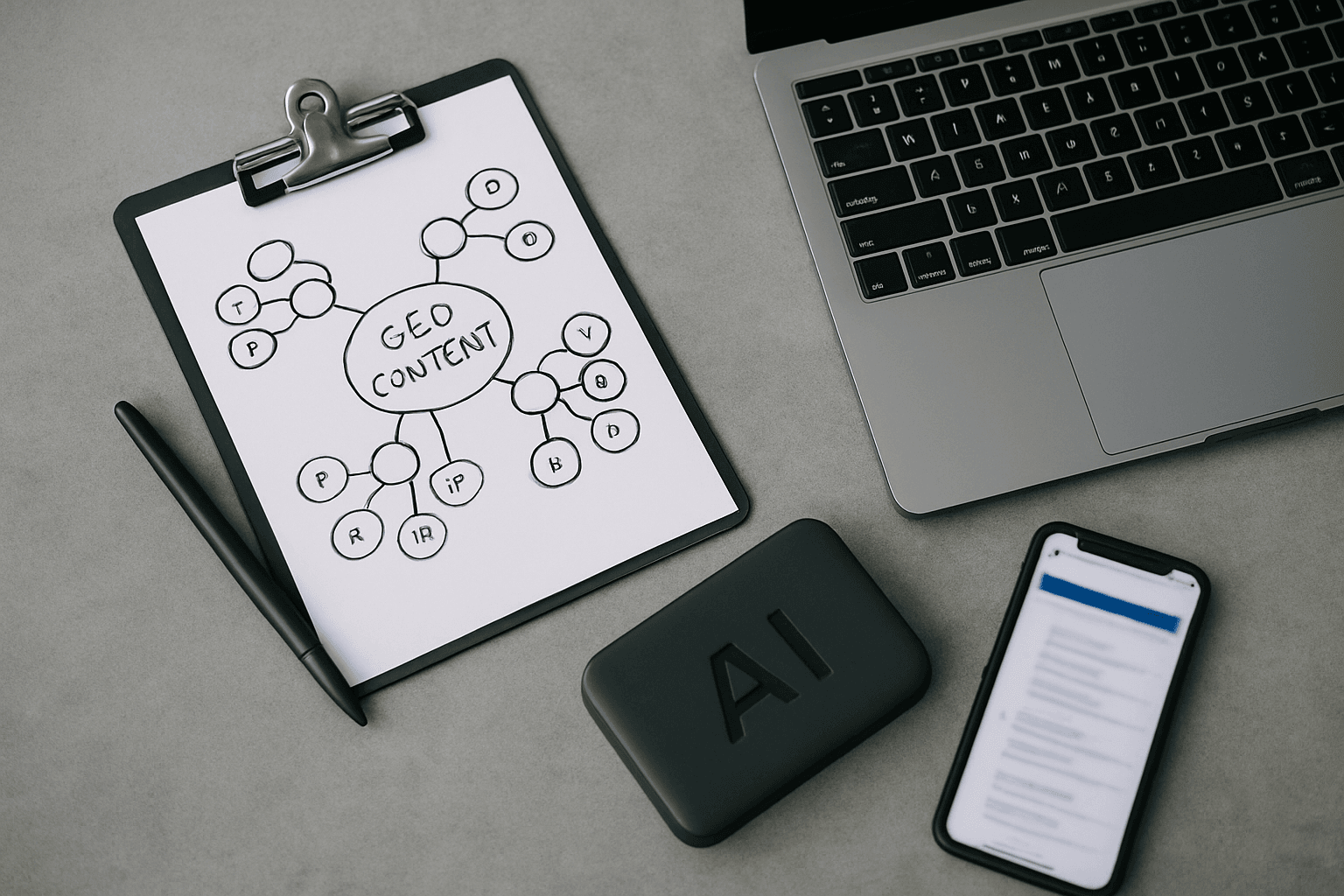
Before you generate a single article, you need a content architecture that makes sense. This is where mind mapping becomes essential for SEO structure, it lets you visualize how topics connect, identify content gaps, and plan clusters that support each other rather than competing.
Start by mapping your core topics as hubs. For an enterprise SaaS company, a hub might be "API security best practices." From that hub, you identify 15–20 spoke topics: "OAuth implementation guide," "API rate limiting strategies," "JWT token security," and so on. Each spoke targets a specific long-tail query while linking back to the hub, building topical authority that Google rewards.
Keyword clustering tools and keyword mapping software help agencies SEO content scale to 50+ clients by automating this process. Instead of manually grouping hundreds of keywords, modern platforms analyze search intent and SERP overlap to automatically cluster related queries. You end up with logical groupings that match how users actually search, not arbitrary categories you invented.
According to Webflow's content scaling guide, planning 6–12 weeks ahead is critical when producing high volumes. Your mind map becomes the roadmap, you know exactly which clusters to tackle each month, how they connect to existing content, and where gaps still exist. This strategic layer prevents the "random article syndrome" that plagues agencies trying to scale without a plan.
The business outcome matters more than the topic itself, a principle supported by recent AI SEO results showing Google ranking proof from 100+ sites. Map each content cluster to a specific goal: awareness, consideration, or decision stage. A cluster about "what is technical SEO" serves awareness; "technical SEO audit checklist" serves consideration; "hire technical SEO consultant" serves decision. When you're producing 100+ articles monthly, this intentionality prevents you from drowning in content that generates traffic but never converts.
SEO Siah's mind map strategy tool automates this entire planning phase. It analyzes your seed keywords, identifies clusters based on search intent and SERP patterns, and generates a visual hierarchy showing how articles should connect. What used to take a strategist three days now happens in minutes, with the added benefit of data-driven clustering rather than intuition-based guesses. Business owners get a clear roadmap without needing to understand SEO mechanics, while specialists using content agency software get granular control over cluster definitions and priority scoring.
Selecting a Bulk Article Generator That Prioritizes E-E-A-T for SEO Content Scale
Not all AI content tools are created equal. Many bulk generators produce generic, surface-level articles that fail Google's quality standards. When you're scaling to 100+ articles monthly, you need a system that bakes E-E-A-T (Experience, Expertise, Authoritativeness, Trustworthiness) into the generation process, not as an afterthought.
The key differentiator is whether the tool generates isolated articles or builds interconnected content ecosystems. Isolated generators take a keyword, produce 1,500 words, and call it done. Ecosystem builders understand where each article fits in your broader content strategy, automatically create internal links to related pieces, and maintain consistent depth across topics. The best content agency software approaches content as a connected system rather than individual pieces.
Look for generators that incorporate original data and specific examples rather than rehashing existing content. Siteimprove emphasizes that modern content optimization requires "comprehensive topic coverage, original insights, credible sourcing, and actionable takeaways." If your bulk generator can't cite sources, include proprietary frameworks, or reference real-world scenarios, you're just producing commodity content at scale, exactly what Google penalizes.
Schema markup and structured data should be automatic, not manual. When generating 100+ articles monthly, you can't afford to have someone manually add FAQ schema, article schema, and breadcrumb markup to each piece. The generator should output clean HTML with proper structured data already embedded.
SEO Siah's article generation engine is built specifically for E-E-A-T at scale. Each article includes cited sources, original examples drawn from its training on successful SEO content, and structured sections that match search intent. The system automatically generates FAQ sections with proper schema, adds internal links to related articles in your content map, and optimizes on-page elements (title tags, meta descriptions, header hierarchy) according to current best practices. For agencies, this means consistent quality across hundreds of articles, true SEO content scale without the quality degradation that typically comes with volume.
The Last Mile: Connecting SEO Siah to WordPress for Auto-Posting
The final bottleneck in most scaled content workflows is publishing. Even if you can generate 100 articles monthly, uploading them to WordPress, formatting images, setting categories, and scheduling publication becomes a full-time job for someone on your team.
Direct CMS integration eliminates this bottleneck entirely. The content generation system should connect to your WordPress site (or any other CMS) and handle the entire publishing workflow: creating the post, formatting the content, uploading and optimizing images, setting appropriate categories and tags, adding internal links, and scheduling publication.
This isn't just about saving time, it's about maintaining consistency. Manual uploads introduce formatting errors, broken links, and inconsistent styling. Automated publishing ensures every article follows the same template, uses the same CSS classes, and maintains proper header hierarchy.
For agencies managing multiple client sites, multi-tenant architecture becomes essential. You need content agency software where each client's content library, brand voice settings, and WordPress credentials are isolated, but you can manage everything from a single dashboard. Switching between client accounts to manually upload articles doesn't scale past a handful of clients.
SEO Siah's WordPress auto-posting handles this entire last mile. Once you approve articles in the dashboard, the system publishes directly to your site on your chosen schedule. It optimizes images for web performance, adds proper alt text, creates internal links to related content, and sets all the metadata WordPress needs. For agencies, the multi-tenant architecture means you can manage 50+ client sites from one interface, with each client's content automatically routed to the correct WordPress installation. Business owners who don't want to touch WordPress at all can set it to fully automated mode, the system plans, generates, and publishes content without any manual intervention.
Maintaining Editorial Integrity and E-E-A-T in a High-Volume Workflow
The biggest concern agencies have about automated content is quality degradation. If you're producing 100+ articles monthly with AI assistance, how do you prevent generic, repetitive content that damages your clients' brands? The answer lies in building quality controls directly into your workflow, not bolting them on afterward.
First, understand that automated SEO content isn't inherently good or bad for SEO, it's how you use it that matters. Google's guidance is clear: they reward helpful, satisfying content regardless of how it's produced. The issue is that most AI-generated content lacks the original insights, specific examples, and genuine expertise that make content valuable. When you automate at scale, you need systems that inject these elements systematically.
Start by defining content standards that every article must meet before publication. Caisy recommends establishing clear style guides, brand voice documentation, and quality checklists that teams can reference. At 100+ articles monthly, these standards can't be subjective, they need measurable criteria. Does the article include at least one original example or case study? Does it cite at least two authoritative sources? Does it answer the target query in the first 100 words? If an article fails these checks, it doesn't get published.
Human oversight remains critical, but it shifts from writing to strategic editing. Instead of writers creating first drafts from scratch, editors review AI-generated drafts and enhance them with proprietary insights, client-specific examples, and nuanced perspectives that machines can't produce. An editor can review and improve five automated SEO content drafts in the time it would take to write one article from scratch, that's how you reach 100+ articles monthly without sacrificing quality.
Fact-checking becomes non-negotiable at scale. AI models sometimes hallucinate statistics, misattribute quotes, or reference outdated information. Build a verification step into your workflow where someone confirms that every factual claim, statistic, and citation in your automated SEO content is accurate and current. This doesn't require deep subject matter expertise, just diligence and access to source materials.
Content audits need to be continuous, not quarterly. Siteimprove advises regular freshness updates with new statistics and examples, but at 100+ articles monthly, you're constantly publishing. Set up automated monitoring that flags articles with declining traffic, rising bounce rates, or outdated information. These become your update queue, refresh the top 20% of underperforming content each month rather than letting everything age without maintenance.
Internal linking discipline prevents your content ecosystem from fragmenting. When you publish 100+ articles monthly, it's easy to lose track of which pieces should link to each other. Use your mind map as the source of truth, every spoke article should link to its hub, and related spokes should cross-link where relevant. Content agency software like SEO Siah automates this by maintaining a knowledge graph of your content and automatically inserting contextual internal links during generation.
Brand voice consistency comes from clear documentation and AI fine-tuning. Write a 2–3 page brand voice guide that includes specific examples: sentence structures you prefer, tone descriptors, words to avoid, and sample paragraphs that exemplify your style. Modern content agency software can internalize these guidelines and apply them consistently across all generated content. The result is 100 articles that sound like they came from the same editorial team, even though they were generated automatically.
Quality metrics should drive continuous improvement. Track engagement signals (time on page, scroll depth, bounce rate) and SEO performance (rankings, impressions, click-through rate) for every article. Feed this data back into your content standards. If articles with specific characteristics consistently outperform others, codify those characteristics into your generation templates. This creates a feedback loop where your automated SEO content system gets better over time rather than producing the same mediocre content indefinitely.
The agencies that successfully scale to 100+ articles monthly don't choose between automation and quality, they build systems where automation enables quality at scale. SEO Siah's E-E-A-T optimization layer does exactly this: it generates content that includes proper citations, original examples, and comprehensive topic coverage by default, then provides editors with clear quality scores and improvement suggestions before publication. Business owners get SEO content scale without needing to understand what E-E-A-T means, while SEO specialists get granular controls over every quality parameter and the ability to fine-tune the system based on performance data. The result is a production engine that can reliably output 100+ quality articles monthly without the quality degradation that typically comes with volume.
Standard Agency Workflow for Producing 100+ SEO Articles Per Month
| Stage | Role Responsible | Key Activities | Quality Checkpoints |
|---|---|---|---|
| 1. Strategy & Planning | SEO Strategist | Keyword research, search intent analysis, outline creation | Keywords have search potential and commercial value; topics align with hub & spoke architecture |
| 2. Content Brief | Content Strategist | Define angle, audience segment, funnel stage, required sources | Brief includes clear goals, target format, and E-E-A-T requirements |
| 3. Draft Creation | Writer / AI-Assisted Writer | Research, write first draft following template and style guide | Draft follows inverted pyramid structure; includes original insights and credible sources |
| 4. Editorial Review | Editor | Check accuracy, E-E-A-T compliance, brand voice, fact-checking | Content is comprehensive, non-commodity, and includes proprietary perspectives |
| 5. SEO Optimization | SEO Specialist | On-page optimization, internal linking, schema markup, heading hierarchy | Primary keyword in title/H1/URL; proper heading structure (one H1, 3+ H2s); internal links to hub pages |
| 6. Publishing | Publisher | CMS upload, image optimization with alt text, formatting, mobile responsiveness | Page loads quickly, is mobile-friendly, images have descriptive alt text |
| 7. Performance Tracking | Analyst | Monitor rankings, traffic, engagement, CTR; identify update opportunities | Data feeds back into topic selection and content improvement decisions |
Breaking through the 100-article monthly bottleneck in 2026 comes down to three shifts: treating content as a system rather than individual pieces, automating the repeatable parts of your workflow with content agency software, and maintaining quality standards even at high volume. You'll know you're ready to scale when you have clear processes for research, production, and publishing, not when you're just trying to write faster.
The strategies you've seen here for SEO content scale, mind-map planning, pillar-cluster architecture, modular content frameworks, and AI-assisted production, aren't theoretical. They're what agencies and in-house teams actually use to publish 200, 500, or even 1,000 articles monthly without sacrificing the expertise and depth that Google rewards. The difference between teams stuck at 20 articles and those cruising past 100 isn't budget or team size. It's whether they've built a content engine or are still running a content treadmill.
Your next step depends on where you are now. If you're doing everything manually, start by documenting your process and identifying what automated SEO content can handle versus what needs human judgment. If you're already using tools but hitting quality issues, focus on your brief templates and review criteria before increasing volume.
SEO Siah handles the full production cycle, from keyword research through WordPress publishing, so you can focus on strategy and oversight rather than execution. The content agency software sees the best results in 2026 by enabling teams to work at a different level entirely, not just harder.
Related Articles
- Local SEO Checklist: 7 Ideas to Own the Map Pack in 2026
- SEO Results Timeline: 2026 Guide to Google Maps Success
Frequently Asked Questions
How do you maintain quality when scaling to 100+ articles a month?
Maintaining quality requires standardizing 80% of the production process through structured briefs, proven templates, and automated SEO optimization, while reserving human editorial judgment for the 20% that involves original insights and E-E-A-T signals.
What is the biggest bottleneck in agency content production?
The biggest bottleneck is typically the manual handoff between strategists, writers, editors, and publishers. Direct CMS integration and automated workflows eliminate these delays and prevent formatting inconsistencies.
Can AI-generated content rank well on Google?
Yes, AI-generated content can rank well if it is helpful, satisfying, and non-commodity. It must be enhanced with original data, specific examples, and proper E-E-A-T signals rather than just rehashing existing search results.
How does mind mapping help with SEO content scale?
Mind mapping visualizes how topics connect, helping agencies plan hub-and-spoke architectures. This ensures that all 100+ articles produced monthly are logically clustered and internally linked, building topical authority.