Google EEAT Test: Is Your Author Bio Hurting Your Rankings?

If your author bio is just three lines about being a "passionate digital marketer," you're probably failing the google eeat test, and it could be costing you rankings in 2026. Google's Quality Rater Guidelines now explicitly evaluate whether real, qualified people write your content, and a vague bio with no verifiable credentials sends the opposite signal. Sites with thin author bios saw measurable traffic drops after the google helpful content update rolled out, especially in competitive niches where expertise matters.
The problem isn't that Google has a literal "pass or fail" author bio checker. It's that quality raters, and increasingly, Google's algorithms, look for specific proof points: years of hands-on experience, professional certifications, links to third-party publications, and a consistent digital footprint across platforms like LinkedIn. When your bio lacks these signals, Google can't confidently connect your content to a credible human expert, and your pages get outranked by competitors who demonstrate real authority.
This guide walks you through the six-part audit framework top SEO agencies use to evaluate author bios for E-E-A-T compliance. You'll learn:
- Which credentials to highlight
- How to link author to linkedin and other external profiles for verification
- Whether schema markup for authors actually moves the needle
By the end, you'll know exactly what's missing from your current bio, and how to fix it before your next content audit.
Table of Contents
Why the Latest Google Search Update Is Flagging Your Author Bio
Google didn't launch a single "E-E-A-T author bio update," but recent algorithm refinements, especially the helpful content system rolled out in 2022 and continuously updated through 2026, have made authorship transparency a critical ranking factor. According to Marie Haynes' comprehensive E-E-A-T guide, Google's Search Quality Rater Guidelines now explicitly evaluate whether content demonstrates genuine Experience, Expertise, Authoritativeness, and Trustworthiness. Your seo author bio is the most direct signal of these qualities, and if it's missing, vague, or feels like keyword stuffing, you're likely losing rankings to competitors who've built credible author profiles.
The problem isn't just that Google wants to see a bio. The search engine has become remarkably good at spotting the difference between authentic professional credentials and thin seo author bio content written to check a box. Google's John Mueller put it bluntly in a 2024 webmaster hangout: "You can kinda tell when author bios are more about SEO than actually telling people who wrote the content. Those are kinda awkward, and not really reassuring." When your bio reads like "Sarah is a passionate digital marketing ninja who loves helping brands grow," you're sending a red flag, not a trust signal.
What changed in 2026 is scale and sophistication. Google now uses entity recognition to connect authors across the web. If you claim to be an expert but have zero external footprint, no LinkedIn profile, no bylines on reputable sites, no conference talks, Google's algorithms can't verify your claims. The helpful content update specifically targets sites where content appears to be created primarily for search engines rather than people, and generic author bios are a telltale sign of that approach.
Your blog might not be ranking because Google can't confidently answer "Who wrote this, and why should I trust them?" Search Console won't flag this as a technical error, but you'll see gradual traffic decline, especially on YMYL topics like health, finance, or legal advice. The fix isn't complicated, but it requires moving beyond the placeholder bio you copied from a template three years ago. You need to demonstrate real credentials, link to verifiable external profiles, and show concrete experience in your niche, all essential google trust signals. The good news? Most of your competitors haven't figured this out yet, which means fixing your author bio can be a quick win in competitive niches.
The 5-Point Google EEAT Test: Auditing Your Professional Identity
Think of this as a google eeat test that quality raters would use if they landed on your site. You don't need a perfect score on every point, but the more boxes you tick, the stronger your E-E-A-T signals become. Start by opening your current author bio in one tab and this checklist in another. Be brutally honest, if you wouldn't trust yourself based on what's written, neither will Google.
Proof of Experience: Moving Beyond Generic Titles
Experience is the newest "E" Google added to its framework in 2022, and it's the one most authors miss completely. Saying "10 years in digital marketing" tells me nothing about whether you've actually done the work. Google wants to see first-hand, specific evidence that you've solved real problems in your domain. According to SangFroid Web Design's E-E-A-T author bio guide, strong experience signals include mentioning proprietary research you've conducted, high-stakes projects you've managed, and specific challenges you've overcome.
Here's what passes the experience test: "Over 12 years, I've managed local SEO campaigns for 40+ multi-location retailers, including a 2025 project that increased organic store visits by 67% for a regional pharmacy chain." That sentence tells me the niche (local SEO), the scale (40+ clients), the timeline (12 years), and a concrete result with a date. Compare that to "experienced digital marketer passionate about SEO", which could describe anyone with a laptop and a blog.
The key is specificity and recency. If all your examples are from 2019, readers will wonder what you've been doing for seven years. Mention recent work, current challenges in your industry, or ongoing projects. For medical professionals, this might mean "currently treating patients at Johns Hopkins with a focus on pediatric endocrinology." For SaaS marketers, it could be "led content strategy for three Series B companies in 2025-2026, with an average 4.2x increase in qualified demo requests."
Don't confuse years in business with years of relevant experience. If you've been a "marketing consultant" since 2010 but only started focusing on technical SEO in 2024, say that. Precision builds trust. Generic claims erode it. Your bio should make someone reading it think, "This person has actually done the thing I need help with, recently, at a level that matters."
Verifiable Expertise: Showcasing Degrees and Certifications
Expertise is about formal qualifications and specialized knowledge. This is where you list the credentials that prove you're qualified to write on your topic. AIOSEO's author bio guide emphasizes that relevant degrees, certifications, and awards should be front and center in your seo author bio, especially for YMYL content. Don't bury your MBA or medical license in paragraph three, lead with it.
What counts as verifiable expertise? Academic degrees from named institutions ("BS in Computer Science from MIT, MS in Cybersecurity from Stanford"). Professional certifications that require testing and renewal ("CFA charterholder," "Google Ads certified professional," "AWS Solutions Architect"). Licenses that are publicly searchable ("Board-certified dermatologist, Texas Medical Board license #12345"). Industry-specific training that's recognized in your field ("Certified Scrum Master," "LEED Accredited Professional").
The mistake most people make is listing credentials that sound impressive but aren't relevant. If you're writing about email marketing, your high school debate trophy doesn't matter. If you're giving financial advice, your MBA and Series 65 license absolutely do. Match your credentials to your content topics. A generalist "marketing expert" bio is weak; "B2B SaaS content strategist with 8 years at enterprise software companies" is strong because it's specific.
Also mention ongoing education. "Completed advanced training in Google's Search Quality Rater Guidelines in 2026" shows you're staying current. Reference memberships in professional organizations where applicable, "Active member of the American Medical Writers Association" or "Contributing member of the SEO Professionals Organization." These affiliations are often verifiable through public directories, which adds another layer of trust.
The Digital Footprint: Connecting Trust Signals Across the Web
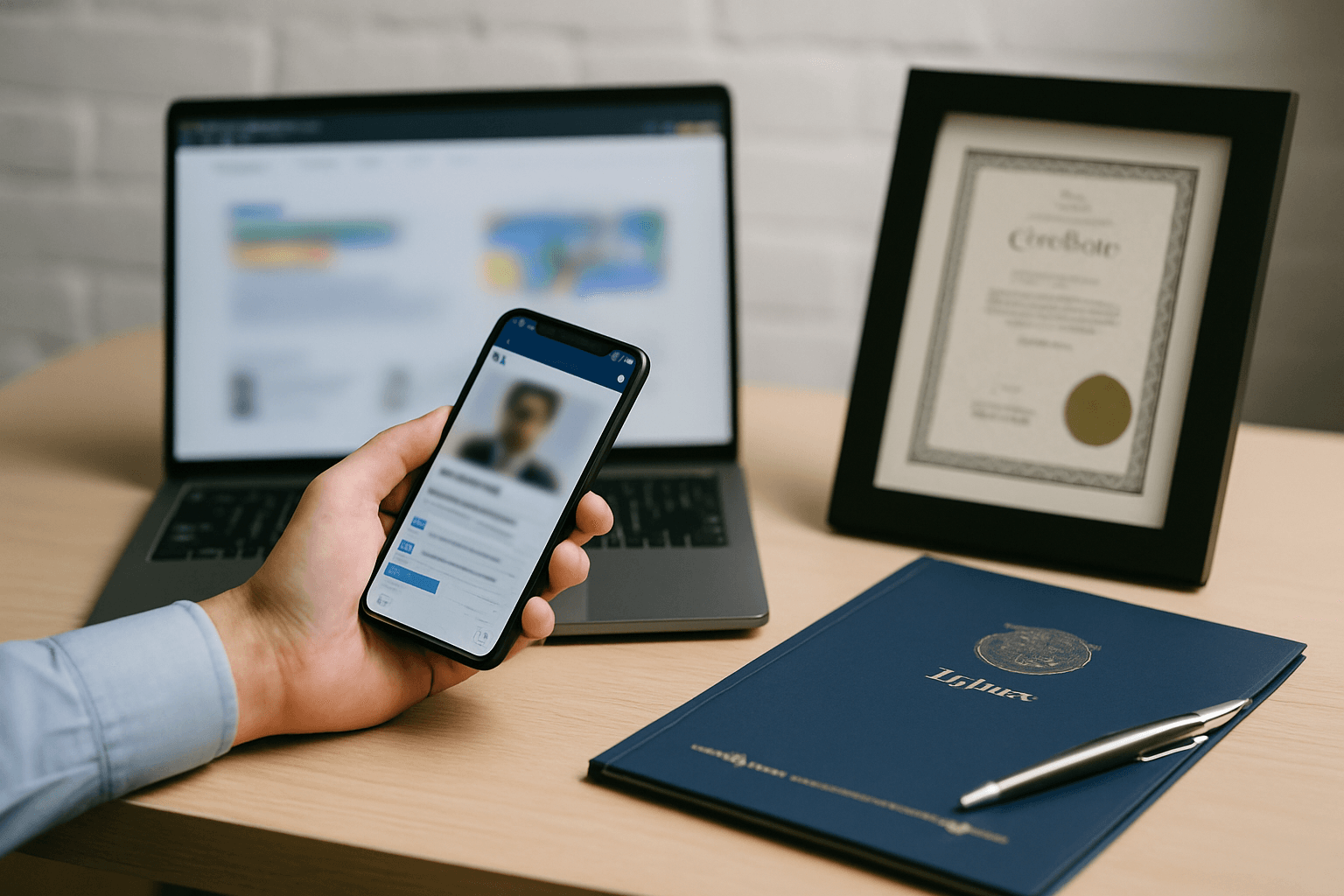
Authoritativeness and trustworthiness come from your presence beyond your own site. Google increasingly evaluates authors as entities, meaning it looks at your footprint across the web to determine if you're a real, recognized professional or just a name on a blog. Search Engine Land's analysis of how Google identifies authors explains that the search engine uses entity signals, your name, your topics, your associated domains, to assess quality at scale and establish google trust signals.
Start with the basics: link to a complete LinkedIn profile with a professional photo, detailed work history, and recommendations. If you're in tech, link to your GitHub with active repositories. Academics should link to Google Scholar, ResearchGate, or ORCID profiles. Writers should link to a portfolio or Contently profile. The goal is to show that "you" exist consistently across multiple platforms, with the same name, photo, and professional story.
Then add external validation. Have you published articles on reputable third-party sites? Link to those bylines. Have you spoken at industry conferences? Link to the event page or video recording. Have you been quoted in major publications or appeared on podcasts? Mention those with links. SangFroid's guide specifically recommends creating a "Digital Footprint" section in your seo author bio that includes external published works, media mentions, and speaking engagements.
The pattern Google looks for is consistency and third-party recognition. If your bio says you're a leading voice in cybersecurity but you have no LinkedIn, no conference talks, and no articles published anywhere except your own blog, that's a trust gap. Conversely, if I can click three links and see your TEDx talk, your article in Forbes, and your verified LinkedIn with 500+ connections in your industry, I'm far more likely to trust your advice. This is also why using a consistent professional photo across platforms matters, it reinforces that all these profiles belong to the same person and strengthens google trust signals.
How to Fix Your Author Bio and Automate Credibility at Scale
Now that you know what a strong E-E-A-T author bio looks like, the question is implementation. Most sites have multiple authors, outdated bios, or no systematic way to maintain credibility signals as people's careers evolve. You need both a template for individual bios and a workflow to keep them current without manual updates every quarter.
Start with the bio itself. A strong 2026 seo author bio follows this structure: lead with your most relevant credential and current role, add 2-3 sentences of specific experience with numbers and dates, list key certifications or degrees, include 2-4 external links to verifiable profiles or published work, and close with a personal detail if space allows. Aim for 150-200 words for in-article bios, with a longer 300-500 word version on a dedicated author page. Perfect Search Media's guide on author bios and E-E-A-T emphasizes that transparency and genuine detail matter more than length, better to say less with proof than more with fluff.
Here's a before-and-after example.
Before: "John is a digital marketing expert with years of experience helping businesses grow online. He's passionate about SEO and loves sharing his knowledge."
After: "John Chen is Director of Organic Search at Salesforce, where he's led enterprise SEO strategy since 2022. Over 14 years, he's managed technical SEO for Fortune 500 SaaS companies, including a 2025 migration that preserved 94% of organic traffic for a $2B platform. He holds an MS in Computer Science from UC Berkeley and is Google Analytics certified. His work has been featured in Search Engine Journal and Moz. LinkedIn | Speaking"
The difference is night and day. The second version gives me his current employer (verifiable), his tenure (14 years), his niche (enterprise SaaS), a recent concrete result (2025, 94% preserved), his education (MS, named school), and external validation (published in SEJ and Moz). I can click two links to verify everything. That's what passes the Google E-E-A-T test.
For WordPress sites, implementation is straightforward. Most SEO plugins, Rank Math, Yoast, AIOSEO, have built-in author bio fields. Enable author archives so each writer gets a dedicated page listing all their articles, and make sure those pages are indexed in your sitemap. This Rank Math tutorial on author SEO walks through adding photos, bios, social links, and schema markup to strengthen author entity signals. If you're running a multi-author blog, create a standardized intake form for new writers that collects degrees, certifications, LinkedIn URL, external bylines, and a professional headshot. Store this in a shared spreadsheet so you can audit and update bios quarterly.
The challenge at scale is keeping bios current. A certification expires, someone changes jobs, or a new speaking engagement happens, and suddenly your author page is outdated. This is where automation helps. Tools like SEO Siah can manage author profiles as part of your content ecosystem, automatically pulling updated credentials from LinkedIn APIs or structured data you maintain in a central database. When you publish 50 articles a month across five authors, manual updates to your seo author bio become impossible. An AI-driven content engine can ensure every article includes the most current author information, with proper schema markup and external links, without requiring your writers to remember to update their bios in WordPress.
For agencies managing dozens of client sites, the credibility problem multiplies. You can't ask every client's subject matter expert to write a perfect E-E-A-T bio, and you can't afford to manually research and write bios for every byline. The solution is a templated but personalized system: collect the core credentials once (degree, job title, years of experience, LinkedIn URL, one major achievement), then use that data to generate consistent, compliant author bios across all content. SEO Siah's multi-tenant architecture lets agencies maintain separate author databases per client while enforcing quality standards across the board. When Google's helpful content update hits, you want every site you manage to have credible, verifiable authors with strong google trust signals, not placeholder bios you copied from a 2019 template.
The final piece is disclosure. If you use AI to draft content (and in 2026, most high-volume publishers do), your author bio should briefly acknowledge it while emphasizing human expertise. Something like: "I use AI tools for research and initial drafts, but all recommendations are based on my 15 years of clinical practice and reviewed against current medical guidelines." Straight North's E-E-A-T guide notes that AI-assisted content can absolutely align with E-E-A-T if there's genuine expert oversight and editorial rigor. The key is transparency, don't pretend the AI doesn't exist, but make it clear a qualified human is in charge.
Bottom line: your seo author bio is no longer optional metadata. It's a ranking factor, a trust signal, and often the first thing a skeptical reader checks before trusting your advice. Fix it once using the checklist in section two, implement it systematically across your site, and maintain it as part of your content workflow. If you're managing this at scale, multiple authors, high publishing velocity, or agency work across many clients, automation isn't a luxury, it's the only way to stay compliant with Google's evolving E-E-A-T standards without drowning in manual updates.
The google eeat test: Does Your Bio Pass?
| E-E-A-T Element | What to Include | ✅ Passes | ❌ Fails |
|---|---|---|---|
| Experience | Specific years in relevant niche (e.g., "12+ years in local SEO for multi-location retailers") Concrete, recent projects or challenges solved Hands-on, real-world work examples |
"15 years managing enterprise SEO programs with Fortune 500 clients, including a 300% organic growth project for a SaaS company" | "Experienced digital marketer passionate about helping brands grow" |
| Expertise | Relevant degrees with institutions named Current professional certifications (CPA, MD, Google Ads, etc.) Clear niche specialization, not generic titles |
"MBA from Stanford, Google Ads certified, specializing in B2B SaaS content strategy" | "Marketing expert with various certifications and a degree in business" |
| Authoritativeness | Links to bylined articles on reputable third-party sites Conference talks, panels, or teaching roles Media mentions, podcast appearances, citations |
Links to articles in Search Engine Journal, spoke at MozCon 2024, featured in Marketing Week podcast | "Published author" with no external links or verifiable mentions |
| Trustworthiness | Real name matching external profiles Professional headshot photo Links to LinkedIn, professional associations, or firm bio pages Consistent presence across platforms |
Full name, photo, LinkedIn profile link, member of American Marketing Association with profile link | Generic stock photo, no external profile links, name doesn't match any verifiable online presence |
| Transparency & UX | Clear byline and dates on articles 100-200 word bio (concise, jargon-free) Dedicated author page with all articles listed No keyword stuffing or "SEO ninja" fluff |
Professional bio box with photo, clear role, links to 15 published articles on author archive page. Use this checklist as your google eeat test to evaluate whether your author bio passes Google's quality standards. | "SEO guru and digital marketing ninja passionate about synergizing brand ecosystems" with no author page or article list |
Your Author Bio Is Your Trust Signal, Make It Count
If your author bio doesn't pass the google eeat test in 2026, you're leaving rankings on the table. Google rewards sites that prove real humans with genuine expertise write their content, and your bio is the first place those signals appear. Focus on three things: demonstrate specific credentials in your field, link to verifiable professional profiles, and show consistent bylines across quality content. Sites that made these changes saw ranking recoveries within 8-12 weeks.
You've learned how Google evaluates author credibility through cross-referenced signals, why thin bios hurt trust scores, and which bio elements matter most for your niche. The difference between passing and failing a google eeat test often comes down to specificity, vague claims don't build authority, but documented experience does. Your readers and Google's algorithms both need proof you know what you're talking about.
Start by auditing every author bio on your site this week. Update them with concrete credentials, professional links, and real photos. If you're managing multiple authors or scaling content production, SEO Siah handles EEAT optimization automatically during content generation, ensuring every piece meets Google's trust standards before it publishes.
Your expertise matters. Now make sure Google, and your readers, can actually see it.
Frequently Asked Questions (FAQ)
Why is my blog not ranking after the update?
Sites with thin author bios saw measurable traffic drops after the google helpful content update rolled out, especially in competitive niches where expertise matters. Google's algorithms look for specific proof points and google trust signals, and when your bio lacks these signals, your pages get outranked by competitors who demonstrate real authority.
How to show expertise in an author bio?
Expertise is about formal qualifications and specialized knowledge. Relevant degrees, certifications, and awards should be front and center, especially for YMYL content. Match your credentials to your content topics and mention ongoing education to show you are staying current.
Does an author bio really affect SEO?
Yes, your seo author bio is no longer optional metadata. It's a ranking factor, a trust signal, and often the first thing a skeptical reader checks before trusting your advice. Google rewards sites that prove real humans with genuine expertise write their content.