DIY SEO Software: Outrank Big Brands on a Budget in 2026

You can build an effective DIY SEO software stack for under $100 per month, and in many cases, for free, using tools like Google Search Console, Screaming Frog, and Ahrefs Webmaster Tools that give you 80% of what expensive enterprise platforms offer. The difference between a small business website and a Fortune 500 brand isn't budget anymore; it's strategy. Big brands dominate broad keywords like "running shoes," but they can't own every niche variation, local search term, or hyper-specific question their customers ask.
Here's what most small businesses miss: outranking big brands on a budget isn't about matching their tool budget. It's about choosing smarter battles. When you target long-tail keywords like "best trail running shoes for wide feet in Denver" instead of generic head terms, you're competing in spaces where content quality and relevance matter more than domain authority. I've seen three-person teams consistently outrank household names by pairing free technical SEO tools with focused content strategies.
The challenge isn't finding affordable tools, dozens exist in 2026. The challenge is knowing which jobs each tool handles, how to combine them without overlap, and which expensive features you actually don't need. This guide walks you through building a lean, job-specific tool stack with DIY SEO software, then shows you exactly how to deploy it against bigger competitors. You'll learn which free tools cover your foundations, when a $50/month investment makes sense, and the strategic moves that turn limited resources into ranking wins.
Table of Contents
Why Small Businesses Struggle to Rank Against Industry Giants
Big brands dominate search results because they've built massive link profiles, publish content daily, and command brand recognition that Google's algorithms reward. According to research from Arvow, established companies often have thousands of backlinks pointing to their domains, while most small businesses start with fewer than fifty. This creates a credibility gap that search engines interpret as authority, pushing smaller sites down in rankings even when their content is equally good or better.
The real challenge isn't just links. Large companies have dedicated teams monitoring every algorithm update, optimizing thousands of pages simultaneously, and outspending competitors on content production. They can afford enterprise SEO platforms costing $500 to $2,000 monthly, hire specialists for technical audits, and maintain armies of writers. When you're running a small business, you're competing against this machine with a fraction of the resources and probably handling SEO alongside a dozen other responsibilities.
Budget constraints force most small businesses into a reactive pattern. You fix problems as they appear rather than building systematic SEO processes. Your competitor publishes ten articles while you're still researching keywords for one. They have developers optimizing site speed while you're trying to figure out why your homepage loads slowly. This isn't a skill problem, it's a resource allocation problem that traditional SEO for small business advice rarely addresses honestly.
Search algorithms have also evolved to favor comprehensive content ecosystems rather than isolated pages. Google increasingly rewards sites that demonstrate topical authority through interconnected content clusters, detailed coverage of subjects, and consistent publishing schedules. A single great article won't cut through anymore when you're competing against brands that have published hundreds of related pieces forming complete knowledge hubs. The playing field feels impossibly tilted, and many small business owners give up before finding strategies that actually work within their constraints.
What most guides miss is that you don't need to beat big brands everywhere, you need to outmaneuver them in specific niches where their size becomes a disadvantage. Large companies struggle with agility, often ignoring long-tail keywords and local intent because they're chasing volume. They publish generic content optimized for broad terms, leaving gaps in specific, high-intent searches where smaller sites can dominate. The key is building a modern workflow with DIY SEO software that automates the tedious parts while letting you focus on strategic advantages only nimble businesses can exploit.
How to Build a Modern DIY SEO Workflow That Actually Works
Modern DIY SEO isn't about manually optimizing individual pages anymore, it's about creating systems that scale your efforts without scaling your budget. The breakthrough for SEO for small business in 2026 comes from combining free foundational tools with strategic automation that handles repetitive tasks. You need a workflow that publishes consistent, interconnected content while maintaining quality standards that satisfy both readers and search algorithms.
Start with the free stack that BacklinkManagement.io recommends as your monitoring foundation: Google Search Console shows exactly which queries bring traffic and which pages need improvement, Google Analytics 4 tracks user behavior to reveal content gaps, and Ahrefs Webmaster Tools provides backlink data without subscription costs. These three tools give you the same visibility into your site's performance that agencies charge clients to access. Set up weekly check-ins to review this data, looking for patterns in what's working rather than obsessing over daily fluctuations.
The real efficiency gain comes from automating content production and site structure. Traditional SEO requires you to manually plan topics, research keywords for each article, write content, optimize it, and publish, a process taking 6-12 hours per article. When you're competing against teams publishing daily, that timeline makes winning impossible. You need AI SEO automation that maintains quality while compressing that timeline to minutes, not hours, freeing you to focus on strategy rather than execution.
Technical setup matters more than most DIY guides admit. Run your site through PageSpeed Insights and fix the issues it identifies, slow sites lose rankings regardless of content quality. Use Screaming Frog's free tier (up to 500 URLs) monthly to catch broken links, missing meta descriptions, and duplicate content before Google penalizes you for them. These aren't optional nice-to-haves; they're table stakes for competing. Big brands have developers handling this automatically, so you need tools that give you the same outcome without the same overhead.
Mastering Automated Pillar and Cluster SEO for Topical Authority
Pillar and cluster architecture is how modern sites demonstrate expertise to search engines. A pillar page covers a broad topic comprehensively (think "Complete Guide to Content Marketing"), while cluster pages dive deep into specific subtopics ("Email Marketing Automation," "Social Media Scheduling Tools," "Content Calendar Templates"). Each cluster page links back to the pillar, and the pillar links out to all clusters, creating a content hub that signals topical authority Google rewards with higher rankings.
Building this manually is brutal. You need to identify the right pillar topics, research dozens of related cluster keywords, ensure they're interconnected properly, and maintain consistent publishing schedules. Most small businesses plan one pillar cluster and give up after publishing three articles because the coordination overhead becomes overwhelming. SEOpital's analysis shows that successful content hubs require at least 8-12 cluster pages to gain traction, which means months of work using traditional methods.
Automated pillar-cluster systems change the economics completely. Instead of manually researching and planning, you define your core topic and let DIY SEO software generate the entire structure, identifying pillar opportunities, mapping related clusters, researching keywords for each piece, and even suggesting internal linking patterns. SEO Siah's automated approach builds complete content ecosystems in the time it used to take to outline a single article, giving small businesses the same comprehensive coverage that large brands achieve through team effort.
The strategic advantage comes from speed and consistency. While your competitor is still planning their content calendar, you've published a complete pillar cluster and moved on to the next topic. Your site builds topical authority across multiple subjects simultaneously rather than slowly accumulating scattered articles. Search engines notice this pattern, sites that publish interconnected content consistently get crawled more frequently and rank faster for new topics. You're not just competing with big brands anymore; you're using their own playbook against them with tools that level the resource gap.
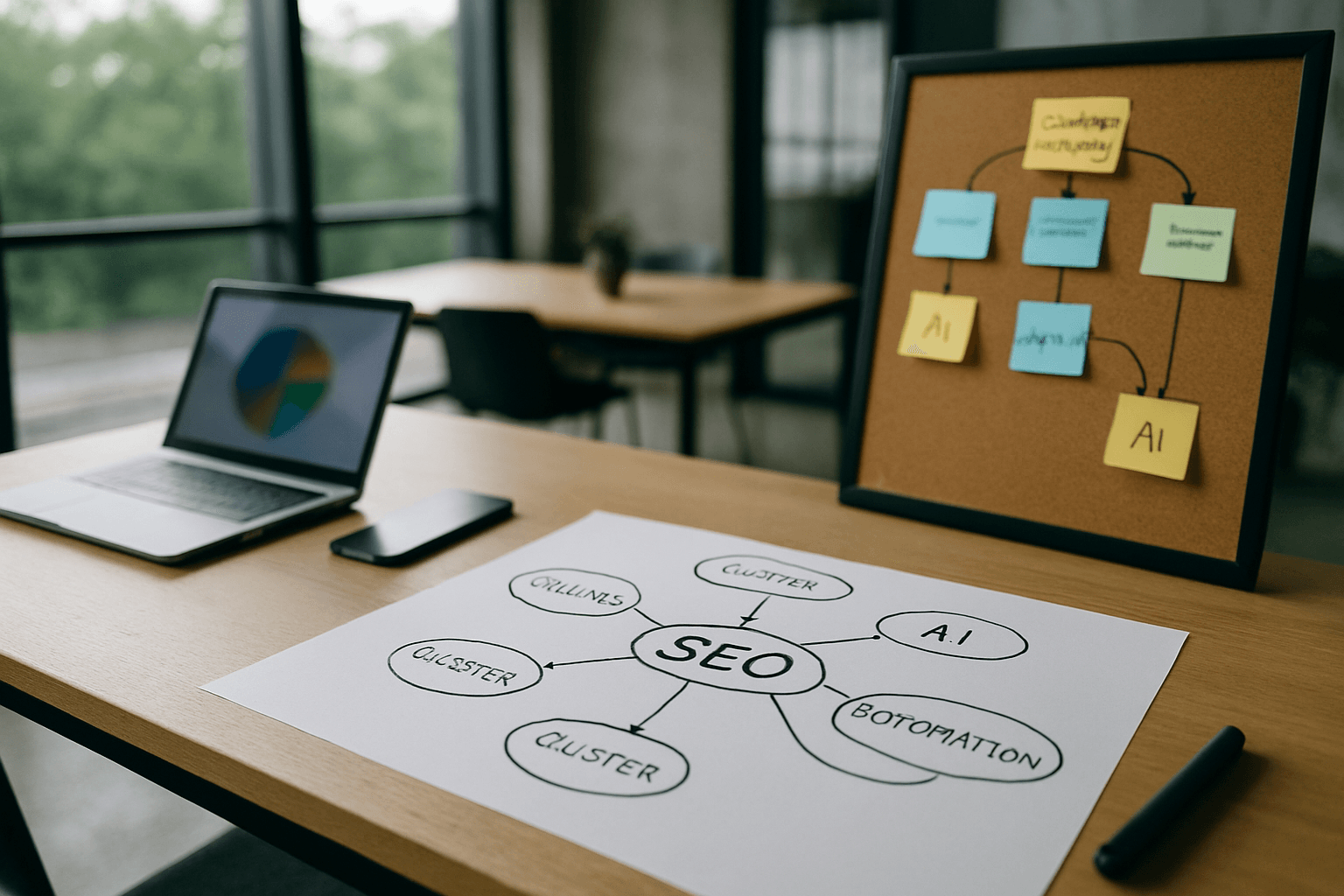
Visualizing Your Growth with a Strategic Content Mind Map
Content mind maps transform abstract SEO strategy into visual roadmaps you can actually execute. Instead of spreadsheets listing keywords and topics, a mind map shows how your content connects, which articles support others, where gaps exist in your coverage, and how new pieces fit into existing structures. This visualization is how successful SEO teams plan at scale, but most small businesses skip it because creating detailed mind maps manually takes hours and requires expertise to do correctly.
The power of mind mapping becomes clear when planning competitive niches. Say you're targeting "local bakery marketing", a mind map reveals that you need foundational content about social media basics, Google Business Profile optimization, and email marketing before publishing advanced tactics about Instagram Reels or loyalty programs. It shows you which articles to write first, which keywords each should target, and how they interconnect to build authority systematically. Without this view, you publish randomly and wonder why rankings don't improve.
SEO Siah's mind map strategy automates this planning layer entirely. Input your target topic, and the system generates a complete visual strategy showing pillar opportunities, cluster topics, keyword priorities, and suggested publishing order. You see your entire content ecosystem before writing a single word, letting you make strategic decisions about where to invest effort. Should you compete for broad terms or focus on long-tail variations? The mind map shows traffic potential and competition levels for each branch, turning guesswork into data-driven choices.
This approach prevents the scattered content problem that kills most DIY SEO efforts. Every article you publish fits into a larger strategy rather than existing as an isolated piece hoping to rank. You build momentum because each new article strengthens existing clusters and opens opportunities for new ones. After three months, you have interconnected content hubs that search engines recognize as authoritative resources, while competitors are still publishing random blog posts and wondering why nothing ranks. The mind map gives you the strategic clarity that used to require hiring an SEO consultant.
Implementing AI Workflows to Save Time and Reduce Costs
AI content generation has evolved past the robotic articles that plagued SEO in 2023-2024. Modern AI SEO automation workflows in 2026 produce research-backed, well-structured content that passes Google's E-E-A-T guidelines when implemented correctly. The key is using AI for the heavy lifting, research synthesis, outline creation, first drafts, while maintaining human oversight for accuracy, brand voice, and strategic positioning. This hybrid approach lets small businesses publish at scales that used to require content teams.
The workflow starts with AI-powered keyword research that identifies opportunities big brands overlook. Instead of targeting "project management software" where you'll never outrank Asana, AI tools surface long-tail variations like "project management for construction subcontractors" or "free project tracking for nonprofits" with clear commercial intent and manageable competition. Morningscore's research confirms that SEO for small business wins by dominating specific niches rather than competing for generic head terms, and AI excels at finding these pockets of opportunity.
Content generation automation handles the time-consuming parts of writing. Feed the system your target keyword and strategic parameters, and it produces complete drafts with proper structure, internal linking suggestions, and optimization for featured snippets. What used to take 6 hours now takes 20 minutes of review and refinement. You're not sacrificing quality, you're eliminating the blank-page problem and repetitive optimization tasks that drain time without adding strategic value. The AI handles research synthesis and structural optimization while you focus on adding unique insights and brand personality.
The cost difference is dramatic. Hiring freelance writers for SEO content costs $100-$300 per article, meaning a modest content calendar of 12 articles monthly runs $1,200-$3,600. An agency charges similar rates or bundles it into retainers starting at $2,000 monthly. DIY SEO software reduces this to subscription costs under $200 monthly while producing higher volumes. You're not just saving money, you're gaining flexibility to test topics, pivot strategies, and scale up when something works without renegotiating contracts or finding budget for additional freelancers. For a detailed comparison of these costs, see our guide on SEO company pricing and whether agencies are worth the investment.
Choosing the Best DIY SEO Tools for Your Budget and Goals
Tool selection determines whether your DIY SEO efforts scale or stall. The wrong choice means paying for features you don't need while lacking capabilities that matter, or worse, buying multiple tools that don't integrate and create more work than they save. Most small businesses approach this backward, they ask "what's the best SEO tool?" when they should ask "what jobs do I need done, and what's the minimum viable stack to do them well?"
According to theStacc's analysis of budget SEO tools, successful DIY setups share a pattern: they start with free tools for monitoring and diagnostics, add one affordable all-in-one platform for core tasks, then supplement with specialized tools only when specific needs justify the cost. This layered approach keeps monthly expenses under $100 while covering keyword research, content optimization, technical audits, and rank tracking. The key is resisting the urge to buy premium tools before you've exhausted free options and proven you'll use paid features enough to justify them.
Your budget tier determines your tool strategy. At $0 monthly, stick with Google Search Console for performance data, Google Analytics 4 for user behavior, Ahrefs Webmaster Tools for backlink monitoring, and free browser extensions like Lighthouse for technical checks. This stack handles monitoring and diagnostics well enough to guide your content strategy and catch major technical issues. The limitation is manual work, you're analyzing data and making decisions yourself rather than getting automated recommendations.
Between $50-$100 monthly, you can add an all-in-one platform that automates research and optimization. Tools like SE Ranking, Ubersuggest, or Mangools cover keyword research, competitor analysis, rank tracking, and basic site audits in one subscription. This tier makes sense when you're publishing consistently and need efficiency more than advanced features. You're still doing the strategic thinking and content creation, but AI SEO automation handles data gathering and routine optimization tasks that used to consume hours weekly.
The $100-$200 range opens access to automation platforms that handle end-to-end workflows. This is where DIY SEO becomes genuinely scalable because you're not just getting data, you're getting systems that plan content strategies, generate optimized articles, and publish them automatically. SEO Siah operates in this tier, providing everything from keyword research and mind-map planning to AI content generation and direct CMS publishing. At this budget level, you're competing with the content output of small agencies while maintaining full control over strategy and brand voice. For solopreneurs specifically, we've compiled a detailed breakdown in our 2026 guide to the best DIY SEO software for individual operators.
The biggest mistake is buying enterprise tools like Ahrefs ($99-$999/month) or Semrush ($129-$499/month) when you're just starting. Yes, they're powerful, but their value comes from features most small businesses won't use for months or years, massive keyword databases, advanced competitor analysis, and agency-level reporting. U.S. Chamber of Commerce recommendations emphasize starting free and upgrading only when you hit clear limitations in your current stack. If you're publishing fewer than 10 articles monthly, you don't need a $129/month tool yet. SEO for small business success starts with mastering free tools before investing in premium platforms.
Evaluate tools by jobs, not features. You need five core capabilities: keyword research to find opportunities, content optimization to rank for them, technical auditing to avoid penalties, rank tracking to measure progress, and ideally automation to scale efforts. Make a spreadsheet listing these jobs, then find the cheapest combination of tools that covers all five. Often, this means Google Search Console (free) for diagnostics, Google Keyword Planner (free) for basic research, a $50 all-in-one tool for optimization and tracking, and AI SEO automation for content production. This stack costs less than one month of agency fees while giving you control over your entire SEO process.
Watch for hidden costs that inflate budgets. Some tools charge per user, so collaboration with team members doubles or triples subscription costs. Others limit the number of tracked keywords or crawled pages, forcing upgrades as your site grows. Read pricing tiers carefully and project costs six months out based on your growth plans. A tool that seems affordable at $29 monthly might jump to $99 when you hit their keyword limits, while a platform with higher base pricing but unlimited usage stays predictable.
The quality question matters more than most beginners realize. Cheap tools sometimes provide outdated keyword data, inaccurate rank tracking, or surface-level audits that miss critical issues. This doesn't mean you need expensive platforms, it means you should verify outputs against free authoritative sources. Cross-check keyword volumes from budget DIY SEO software against Google Search Console data, verify rank tracking with manual searches, and confirm technical issues with Google's own PageSpeed Insights and Mobile-Friendly Test. Good DIY SEO means using affordable tools intelligently, not trusting them blindly.
Integration determines whether your tool stack saves time or creates busywork. If you're manually exporting data from one tool, reformatting it, and importing to another, you've built inefficiency into your workflow. Look for platforms that connect directly to your CMS, share data between modules, and automate handoffs between research and execution. SEO Siah's architecture exemplifies this, keyword research flows directly into content planning, which feeds article generation, which publishes straight to WordPress. You're not managing five separate tools; you're operating one system with five capabilities.
Your goals should drive tool selection more than budget. If you're building a local service business, you need strong local SEO features and Google Business Profile tools more than advanced technical auditing. If you're creating a content site, prioritize keyword research depth and content optimization over local features. If you're in e-commerce, technical SEO and page speed optimization matter more than both. Match your tool stack to your business model rather than buying generic "best SEO tools" that waste budget on irrelevant features.
Avoid the tool-hopping trap that wastes months and money. Beginners often buy a tool, use it for two weeks, get frustrated with results, and switch to a different platform. They repeat this cycle, blaming tools for problems that are actually strategy or execution issues. Pick a stack that covers your core jobs, commit to it for at least three months, and learn it thoroughly before evaluating alternatives. SEO results take time regardless of tools, and constantly switching prevents you from building the expertise that makes any platform effective. If you're concerned about choosing the wrong platform, read our analysis of common SEO agency red flags that also apply to software selection.
The trust factor in DIY tools deserves attention. You're making business decisions based on the data these platforms provide, so accuracy matters enormously. Stick with tools that source data from reliable APIs (Google, Bing, established SEO databases) rather than proprietary estimates. Check user reviews for complaints about data accuracy, customer support responsiveness, and whether the company maintains its product or lets it stagnate. A tool that was excellent two years ago might be outdated now if the company stopped development, leaving you with inaccurate recommendations that hurt rather than help rankings.
For most small businesses and solopreneurs in 2026, the winning combination is free monitoring tools plus one comprehensive automation platform. Google Search Console and Analytics 4 handle performance tracking at zero cost, while AI SEO automation handles the labor-intensive parts, research, planning, content creation, and publishing. This setup costs less than hiring one freelance writer monthly while producing the systematic, interconnected content that actually builds rankings. You're not cutting corners; you're allocating budget to automation that scales your efforts rather than manual services that don't. To understand how to build trustworthy AI content that satisfies Google's quality guidelines, explore our E-E-A-T SEO audit guide.
DIY SEO Tool Stack by Budget Tier: Free to $100/Month
| Budget Tier | Keyword Research | Technical SEO | Content Optimization | Backlink Analysis | Best For |
|---|---|---|---|---|---|
| $0/month | Google Keyword Planner, AnswerThePublic, Google Trends | Google Search Console, PageSpeed Insights, Screaming Frog (free tier), Lighthouse | Hemingway Editor, Google Docs | Ahrefs Webmaster Tools (free), Google Search Console | Absolute beginners, bootstrapped startups, testing SEO viability |
| Under $50/month | Ubersuggest ($12-29/mo), Ryan Robinson's tool | Screaming Frog (paid), Mobile-Friendly Test, Bing Webmaster Tools | AI writing assistants, Canva | Ahrefs Webmaster Tools, basic backlink checkers | Solo founders, local businesses, content-first sites |
| $50-100/month | SE Ranking, Moz Pro Starter | Screaming Frog (paid), site audit tools in all-in-one platforms | Clearscope (if budget allows), advanced AI tools | Moz Link Explorer, SE Ranking backlink tools | Small teams, competitive niches, scaling content operations |
| $100+/month | Ahrefs, SEMrush, Morningscore | Full site crawlers, advanced technical monitoring | Premium content optimization suites | Full Ahrefs or Moz subscriptions | Established businesses, agencies, highly competitive markets |
You Don't Need a Fortune to Win at SEO
DIY SEO software in 2026 gives you the same tools big brands use, keyword research, content optimization, rank tracking, and technical audits, without the agency price tag. The difference isn't the technology anymore; it's how consistently you apply it. Focus on topics where you actually have expertise, publish regularly, and let the software handle the technical heavy lifting while you concentrate on creating genuinely useful content.
You've seen how the right approach turns budget constraints into advantages. Smaller sites can move faster, target neglected long-tail keywords, and build authentic authority in specific niches while enterprise competitors drown in approval chains and generic content. The software automates what used to require specialists, site audits, competitor analysis, content briefs, so you're competing on insight and execution, not budget size.
Start with one well-researched pillar topic this month. Use your DIY platform to map out supporting articles, optimize what you publish, and track what's actually moving the needle. If you want the entire process automated, from keyword research through publishing, SEO Siah handles the full content ecosystem so you can scale without hiring a team. Whether you're running this yourself or managing clients, the goal stays the same: consistent, strategic content that answers real questions.
Big brands have resources. You have speed, focus, and software that's finally caught up to what you need.
Related Articles
- DIY SEO Software: Outrank Big Agency Budgets in 2026
- EEAT SEO Audit: How to Make AI Content Trustworthy
Frequently Asked Questions
Why is my small business website not ranking against big brands?
Big brands dominate search results because they have massive link profiles, publish content daily, and command brand recognition. Small businesses often struggle due to a credibility gap and budget constraints that force them into reactive SEO patterns rather than building systematic processes.
What is the best DIY SEO software strategy for beginners?
The best approach is building a lean, job-specific tool stack. Start with free foundational tools like Google Search Console and Analytics 4 for monitoring, then add an affordable all-in-one platform or AI SEO automation tool to handle repetitive tasks like keyword research and content generation.
How can I use AI for SEO without losing quality?
Modern AI SEO automation workflows should be used for heavy lifting, such as research synthesis, outline creation, and first drafts, while maintaining human oversight for accuracy, brand voice, and strategic positioning. This hybrid approach ensures content passes Google's E-E-A-T guidelines.