DIY SEO Small Business: 5 UK Owners Hit Page 1

Estimated reading time: 22 minutes
You've spent hours researching DIY SEO small business tactics, bookmarked a dozen YouTube tutorials, and maybe even signed up for a free trial of some keyword tool, only to find yourself staring at your Google Search Console dashboard wondering if any of this will actually work. The question gnawing at you isn't whether SEO is possible without a £5,000-a-month agency; it's whether you can do it yourself and see real results before your patience (or budget) runs out.
Here's what most SEO guides won't tell you: the gap between theory and execution is where most small business owners get stuck. You know you need backlinks, better content, and optimised title tags, but which task actually moves the needle when you've got three hours a week and zero marketing budget? The honest answer comes not from gurus selling courses, but from business owners who've already walked this path and cracked the code.
In this article, you'll meet five UK small business owners who hit page one of Google using scrappy, mostly free tactics, no agencies, no magic software subscriptions, just strategic effort and the right priorities. We'll break down exactly what they did, how long it took, and which free tools they leaned on hardest. By the end, you'll have a clear, repeatable playbook drawn from real wins, not theory, but tested moves that work when you're doing it all yourself.
Why These 5 Small Business Owners Decided to Learn SEO Themselves (And Why You Can Too)
Let me be honest with you: most small business owners don't wake up one morning excited to learn SEO. They're busy running their actual business, serving customers, managing inventory, handling invoices, and somehow trying to find time for a personal life in between. Small business SEO feels like this mysterious, technical thing that only specialists with computer science degrees can understand. And when you look at the price tags agencies charge, often £1,500 to £5,000 per month for ongoing work, it's easy to understand why many small business owners simply decide to ignore SEO altogether and hope word-of-mouth will be enough.
But here's what changed for the five business owners you're about to meet: they all hit a wall where traditional marketing wasn't cutting it anymore. One bakery owner was spending £800 monthly on Facebook ads with diminishing returns. A freelance designer was watching competitors with worse portfolios get all the enquiries simply because they showed up on Google's first page. A pet shop owner realised that paying for every single customer click was unsustainable when profit margins were already tight. These weren't people who loved the idea of learning technical skills, they were people who needed a solution that didn't drain their bank account every month.
What they discovered, and what you'll see throughout their stories, is that diy seo small business success isn't about mastering everything at once or becoming a technical wizard. According to real case studies from small businesses, the fundamentals that move the needle are actually quite accessible: understanding what your customers are searching for, creating helpful content that answers their questions, making sure Google can find and understand your website, and building local credibility through reviews and citations. None of these require a computer science degree or expensive software subscriptions.
The truth is, you probably already know more about your business, your customers, and what they need than any SEO agency ever will. You know the exact questions people ask when they call your shop. You understand the problems that keep your ideal customers awake at night. You've seen which products or services people actually buy versus which ones just sound good in theory. This knowledge is the foundation of effective SEO, the technical bits are just the delivery mechanism. When you combine your deep business understanding with some learnable SEO fundamentals, you have a significant advantage over competitors who outsource everything to agencies that manage fifty other clients and can't possibly care about your business the way you do. This is precisely why DIY SEO small business owners often outperform those who delegate everything, nobody understands your customers like you do.
The five owners you're about to meet started from different places. Some had never heard of keywords or meta descriptions. Others had tried SEO before and given up when they didn't see results in two weeks. But they all shared one crucial trait: they were willing to invest time instead of money, and they committed to learning one thing at a time rather than trying to master everything simultaneously. Their stories aren't about overnight success or magical hacks, they're about consistent effort, smart prioritisation, and the willingness to test, measure, and adjust. If you're a small business owner who's tired of paying for every customer, who's frustrated watching less-qualified competitors outrank you, or who simply wants more control over your business growth, their experiences will show you exactly what's possible with diy seo small business approaches when you decide to take control yourself.
The Success Stories: 5 Real Business Owners Share Their Journey to Page 1
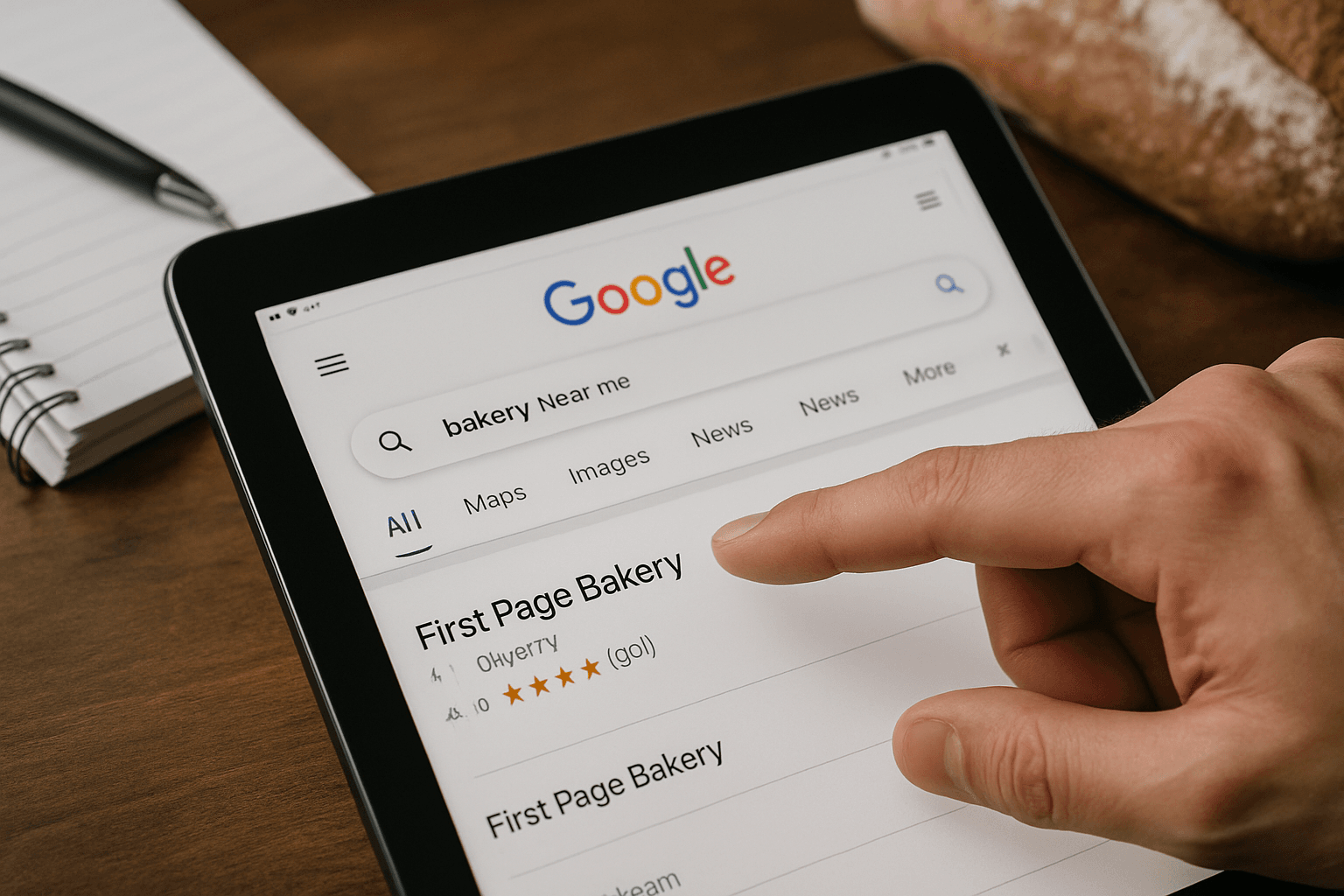
Story #1: The Local Bakery That Ranked in 4 Months Using Only Free Tools
Sarah runs a gluten-free bakery in Bristol, and her story mirrors the success of food content creators who've built massive organic visibility through smart, consistent SEO work. When she started, her website was essentially a digital business card with a menu and contact information. She was spending nearly £800 monthly on Facebook and Instagram ads, and while they brought in customers, the moment she stopped paying, the enquiries dried up completely. She knew there had to be a better way.
Sarah's breakthrough came when she started thinking about her website the way she thought about her actual bakery. In her physical shop, she displayed products beautifully, answered customer questions patiently, and made sure everything was clearly labelled. Why shouldn't her website work the same way? She began by using Google's autocomplete feature, simply typing "gluten free" into the search bar and seeing what questions appeared. The results were revealing: people were searching for "gluten free birthday cake Bristol," "is gluten free bread healthy," "gluten free bakery near me," and dozens of similar queries. These weren't just keywords, they were real questions from real potential customers, the foundation of effective small business SEO.
Instead of trying to rank for impossibly competitive terms like "best bakery," Sarah created specific pages answering specific questions. She wrote a detailed guide on "How to Store Gluten-Free Bread So It Doesn't Go Stale" based on the advice she gave customers every single day. She created a page about "Gluten-Free Birthday Cakes in Bristol" with photos of actual cakes she'd made, pricing information, and a simple booking form. She added an FAQ section answering the twenty most common questions she heard in the shop. None of this required fancy tools or technical expertise, just her knowledge and willingness to write it down in a helpful way.
The technical side was simpler than she expected. Sarah used Google Search Console (completely free) to submit her website and check for errors. She made sure every page had a clear title that included the main topic and "Bristol" where relevant. She added alt text to her cake photos describing what they actually showed, not for SEO primarily, but because it made her site accessible to visually impaired users, and Google appreciated that. She claimed and optimised her Google Business Profile, adding photos weekly and responding to every review within 24 hours. Within four months, she was ranking on page one for "gluten free bakery Bristol" and several related terms. Her organic traffic went from essentially zero to over 300 visitors monthly, and more importantly, about 15% of those visitors became paying customers, without her spending a penny on ads.
Story #2: How a Freelance Designer Went from Invisible to Fully Booked in 6 Months
James had been freelancing as a graphic designer in Manchester for three years, relying almost entirely on referrals and the occasional Upwork project. His portfolio was excellent, objectively better than many competitors who seemed to have endless enquiries, but when potential clients searched for "graphic designer Manchester" or "logo design Manchester," his website was nowhere to be found. He was stuck on page four or five, which might as well be page four hundred in terms of actual traffic.
What frustrated James most was watching designers with mediocre portfolios rank higher simply because they understood SEO basics he didn't. Similar to the self-taught SEO founders who built successful agencies from scratch, James decided to treat learning SEO as a project with a clear scope and timeline. He gave himself six months to figure it out, committing to spending five hours per week on SEO-related tasks. This time-boxing was crucial, it prevented him from falling down endless rabbit holes while ensuring consistent progress.
James started by auditing what was actually on his website. He had a beautiful portfolio, but almost no words, just images of his work. Google couldn't read images the way humans could, so his site was essentially invisible to search engines despite looking great to human visitors. He began adding context: project descriptions explaining the client's challenge, his design approach, and the results achieved. He wrote case studies for his five best projects, turning them from simple portfolio pieces into stories that demonstrated his problem-solving ability. Each case study naturally included relevant keywords like "brand identity design," "logo design process," or "packaging design Manchester," but more importantly, they showed potential clients exactly how he worked and what results they could expect.
The transformation in James's approach came when he stopped thinking about SEO as a technical puzzle and started thinking about it as customer service. Every page on his website should answer a question or solve a problem for a potential client. He created a detailed "Services" section breaking down exactly what was included in each package and what clients could expect at each price point, transparency that both Google and potential clients appreciated. He started a simple blog answering questions he heard repeatedly: "How much should a logo cost?" "What's the difference between RGB and CMYK?" "How long does brand identity design take?" These weren't exciting topics for him personally, but they were exactly what his potential clients were searching for.
James also focused heavily on local SEO, recognising that most of his ideal clients were Manchester-based businesses who preferred working with someone local. He optimised his Google Business Profile, added his business to local directories, and made sure his name, address, and phone number were consistent everywhere online. He reached out to previous clients and politely asked if they'd leave a Google review, most were happy to, they simply hadn't thought to do it without being asked. After six months of consistent effort, James was ranking on page one for multiple Manchester-based design searches, his organic enquiries had increased by over 400%, and he was actually turning down projects because he was fully booked. The SEO work he'd done continued generating leads month after month without additional effort, unlike the Upwork bidding treadmill he'd escaped.
Story #3: The Online Pet Shop Owner Who Cracked Google's First Page in 8 Months
Emma's online pet supplies shop was stuck in a frustrating catch-22. She was spending roughly £1,200 monthly on Google Ads to drive traffic, but her profit margins on pet supplies were relatively thin, around 20-30% on most products. This meant she was paying for every single customer, and if she stopped advertising, her sales dropped to almost nothing. She needed a way to generate traffic that didn't require paying Google for every click, but she had no idea where to start with organic SEO.
Emma's approach was heavily influenced by the content strategies used by successful niche sites. She studied how glossary sites built thousands of rankings through consistent, targeted content creation, and she realised she could apply similar principles to pet care. Instead of just listing products, she could create helpful content around the questions pet owners were constantly asking. She started by making a massive list of every question customers had asked her via email, social media, or customer service calls over the past year. The list was enormous, over 200 questions ranging from "How often should I bathe my puppy?" to "What's the best diet for a senior cat with kidney issues?"
Rather than trying to answer all 200 questions immediately, Emma prioritised strategically. She used free tools like Google Keyword Planner and AnswerThePublic to see which questions had decent search volume, and she focused on topics where she could naturally mention or link to products she sold. She created a content calendar committing to publishing two detailed guides per week, a pace she could sustain alongside running the actual business. Each guide was 1,000-1,500 words, included practical advice based on her experience and research, and naturally incorporated relevant product recommendations where appropriate.
The technical implementation was straightforward. Emma used a simple WordPress site with a free SEO plugin (All in One SEO) that guided her through basic optimisation. For each article, she wrote a clear, descriptive title that included the main keyword, a meta description that summarised the content and encouraged clicks, and she used headings (H2, H3) to break up the content logically. She added FAQ schema markup to her most question-focused articles, a technical-sounding term that was actually just clicking a few buttons in her SEO plugin. This schema helped her content appear in Google's "People Also Ask" boxes, dramatically increasing visibility.
Emma also recognised that product pages themselves needed optimisation. Instead of manufacturer descriptions that appeared on hundreds of other sites, she wrote unique descriptions for her top 50 products, focusing on answering the questions customers actually had. For a premium dog food, instead of just listing ingredients, she explained who it was best for (active dogs, senior dogs, dogs with allergies), how it compared to cheaper alternatives, and what results owners could expect. These weren't long, just 200-300 words per product, but they were unique, helpful, and gave Google something to work with. After eight months of consistent content creation and optimisation, Emma's organic traffic had increased by over 600%, she was ranking on page one for dozens of pet care queries, and most importantly, about 40% of her sales now came from organic search rather than paid ads. She'd essentially built a marketing asset that continued generating value month after month without ongoing advertising costs.
Story #4: A Plumber's 5-Month Journey from Zero Traffic to 50+ Enquiries Monthly
Tom had been working as a plumber in Leeds for fifteen years, building a solid reputation through word-of-mouth and repeat customers. His website existed mainly because everyone told him he needed one, but he'd never paid much attention to it. When a regular customer mentioned they'd tried to find him on Google and couldn't, Tom realised he had a problem. Younger homeowners didn't use Yellow Pages anymore, they searched Google, and if you weren't visible there, you essentially didn't exist to them.
Tom's situation is remarkably common among local service providers, and his success mirrors the local business SEO case studies that show how basic local optimisation can transform a business's visibility. He started with the most important element for small business SEO: his Google Business Profile. He claimed it (discovering that someone had created a partial listing with wrong information), added dozens of photos of completed jobs, wrote a detailed business description, and most crucially, started asking satisfied customers for reviews. This last part felt uncomfortable at first, British reserve makes asking for reviews feel pushy, but Tom discovered that when he simply sent a text after completing a job saying "If you were happy with my work, I'd really appreciate a Google review," most customers were glad to help.
The website optimisation was more straightforward than Tom expected. He created separate pages for each main service: "Emergency Plumber Leeds," "Boiler Installation Leeds," "Bathroom Fitting Leeds," and so on. Each page included the same basic elements: what the service included, typical pricing (even just ranges helped set expectations), how quickly he could respond, and several photos of similar jobs he'd completed. He added a simple FAQ section answering questions he heard constantly: "Do you charge for quotes?" "How quickly can you come for an emergency?" "Are you insured?" These pages weren't literary masterpieces, Tom was a plumber, not a writer, but they were clear, honest, and helpful, which is exactly what both Google and potential customers valued.
Tom also implemented a simple content strategy that required minimal time investment. Once per month, he wrote a short guide (500-700 words) about a common plumbing issue: "What to Do If Your Boiler Stops Working," "How to Prevent Frozen Pipes in Winter," "Signs You Need to Replace Your Boiler." These weren't comprehensive technical manuals, they were practical advice for homeowners, written in plain English, with a clear call-to-action at the end encouraging readers to call him if they needed professional help. He also added location-specific content, creating pages for the specific Leeds neighbourhoods he served, each with a few paragraphs about his experience working in that area and customer testimonials from residents there.
The technical side required minimal effort. Tom used Google Search Console to monitor which searches were bringing people to his site, and he gradually refined his content based on what was actually working. He made sure his contact information was prominently displayed on every page, phone number, email, and a simple contact form. He added his business to local directories and made sure his name, address, and phone number were identical everywhere online, which helped Google understand his business was legitimate and established. Within five months, Tom was ranking on page one for multiple Leeds plumbing searches, his website was generating 50-80 enquiries monthly (compared to essentially zero before), and he was actually having to consider hiring an assistant because he couldn't handle all the work himself. The time investment was minimal, perhaps three hours monthly, but the return was transformative for his business.
Story #5: The Consultant Who Built Authority and Hit Page 1 in 7 Months
Rachel worked as an HR consultant specialising in helping small businesses navigate employment law and build better workplace cultures. Unlike product-based businesses, her challenge wasn't just ranking for local searches, she needed to establish authority and expertise in a field where trust and credibility were paramount. Potential clients weren't looking for the cheapest option; they were looking for someone who genuinely understood their challenges and could provide reliable guidance. This meant her SEO strategy needed to demonstrate expertise, not just visibility.
Rachel's approach was heavily influenced by content marketing principles, but with a sharp SEO focus. She recognised that her ideal clients, small business owners struggling with HR issues, were constantly searching for answers to specific questions: "How to handle a difficult employee," "What to include in an employee handbook," "Do I need HR policies if I only have five employees?" Rather than trying to rank for broad, competitive terms like "HR consultant," she focused on creating genuinely helpful content around these specific queries. Her goal wasn't just to appear in search results, it was to demonstrate her expertise so thoroughly that by the time someone finished reading her content, they were ready to hire her.
The content Rachel created was substantial and detailed. Each article was 1,500-2,500 words, drawing on her fifteen years of experience to provide practical, actionable advice. She didn't hold back information or deliberately leave gaps to force people to hire her, she gave away her best thinking freely, trusting that business owners who needed implementation support would still hire her even after reading her guides. This approach proved remarkably effective. Articles like "The Complete Small Business Guide to Handling Employee Grievances" or "How to Conduct Performance Reviews That Actually Improve Performance" ranked well because they were genuinely comprehensive and helpful, and they established Rachel as an expert worth hiring.
Rachel also implemented strategic internal linking, connecting related articles to create topical authority. Her article on employee handbooks linked to related pieces on disciplinary procedures, data protection policies, and workplace culture. This structure helped Google understand that she had deep expertise across multiple HR topics, not just superficial knowledge of one area. She used simple schema markup (FAQ and Article schema) to enhance how her content appeared in search results, often winning featured snippets that dramatically increased click-through rates. The technical implementation was straightforward using her WordPress SEO plugin, requiring just a few minutes per article.
Building authority also meant building backlinks, which sounds intimidating but proved manageable through smart outreach. Rachel wrote guest articles for small business publications and local business networks, always including a link back to relevant content on her site. She participated thoughtfully in online forums and communities where small business owners asked HR questions, providing genuinely helpful answers (not sales pitches) with occasional links to her detailed guides when relevant. She reached out to complementary service providers, accountants, business coaches, solicitors, and offered to write HR content for their blogs in exchange for attribution and a link. These weren't spammy link-building tactics; they were genuine relationship-building and knowledge-sharing that happened to benefit her SEO.
After seven months of consistent effort, roughly ten hours weekly creating content, optimising pages, and building relationships, Rachel was ranking on page one for multiple HR-related searches, her website traffic had increased from under 100 monthly visitors to over 2,000, and most importantly, she was receiving 15-20 qualified enquiries monthly from potential clients who'd already read her content and understood her approach. Her conversion rate was remarkably high because prospects arrived pre-educated and pre-sold on her expertise. The SEO work had become a powerful business development engine that continued generating qualified leads month after month with minimal ongoing effort, a genuine small business SEO success story.
What Actually Worked: The Common Strategies, Realistic Timelines, and Lessons You Need to Know
Looking across these five SEO success stories, certain patterns emerge that you can apply to your own business regardless of your industry or technical expertise. The first crucial insight is that none of these owners succeeded by trying to master everything at once. They didn't learn advanced technical SEO, international targeting, JavaScript rendering, and schema markup simultaneously. Instead, they focused relentlessly on fundamentals: understanding what their customers were searching for, creating genuinely helpful content that answered those queries, making sure their website was technically sound enough for Google to find and understand it, and building credibility through reviews and mentions.
The timeline expectations are important to understand realistically. Sarah's bakery saw page-one rankings in four months, but she was targeting relatively specific local searches with moderate competition. James needed six months partly because Manchester's design market is more competitive, but also because he was building authority from essentially zero, no existing content, minimal backlinks, no established online presence. Emma's eight-month journey reflected the time required to build substantial content volume in a competitive niche like pet supplies. Tom's five months was faster because local service SEO can move quickly when you nail the fundamentals, and Rachel's seven months reflected the time needed to establish topical authority in a trust-dependent field like HR consulting. The common thread? All of them saw meaningful results within 4-8 months of consistent effort, not the two weeks many beginners expect, but also not the years that pessimists claim are necessary.
The best seo tools these owners used were remarkably simple and mostly free. Every single one relied heavily on Google Search Console, which is completely free and provides invaluable data about which searches are bringing people to your site, which pages are performing well, and what technical issues need attention. Most used Google Keyword Planner (free with a Google Ads account, even if you never run ads) to understand search volume and competition for different keywords. Several mentioned AnswerThePublic for discovering the questions people actually ask around their topics. For on-page optimisation, most used either All in One SEO or Yoast SEO, both offer free versions that cover the essentials. Tom and Sarah both used Google Business Profile extensively, which is free and arguably the most important tool for local businesses. The point isn't that paid tools don't help, they do, but that you can achieve meaningful results without spending hundreds monthly on seo automation tools and software subscriptions.
The content strategies that worked shared several characteristics. First, they were all question-focused rather than product-focused. Even Emma's pet shop, which ultimately sold products, built traffic through helpful guides answering pet care questions, not through product descriptions. Second, the content was specific rather than generic. Rachel didn't write about "HR tips", she wrote comprehensive guides on specific scenarios her clients faced. Tom didn't create a generic "plumbing services" page, he created separate, detailed pages for each specific service. Third, the content demonstrated genuine expertise and experience. These weren't generic articles rewritten from other sources; they were based on each owner's real-world knowledge of their business and customers. This authenticity came through in the writing and made the content both more helpful to readers and more likely to rank well.
The local SEO elements proved absolutely crucial for the service-based businesses. Tom and Sarah both invested heavily in their Google Business Profiles, and both saw this effort pay off dramatically. The key actions that mattered most were: claiming and completely filling out the profile, adding high-quality photos regularly (weekly if possible), responding to every review within 24 hours, posting updates at least weekly, and consistently asking satisfied customers for reviews. The name, address, and phone number (NAP) consistency across the web also mattered, having the exact same business information on your website, Google Business Profile, Facebook page, and any directory listings helps Google understand you're a legitimate, established business rather than spam.
The technical SEO requirements were far less intimidating than most of these owners initially feared. The essential technical elements that mattered were: making sure Google could crawl and index your site (checked via Google Search Console), having a mobile-friendly site (most modern website builders handle this automatically), ensuring reasonable page load speed (compress images, use decent hosting), creating a logical site structure with clear navigation, using descriptive URLs (example.com/services/plumbing rather than example.com/page?id=12345), and implementing basic schema markup for your business type and content. None of these require coding knowledge, most can be handled through website builder settings or simple plugins.
Perhaps the most important lesson across all five stories is the mindset shift required. These owners stopped thinking about SEO as a mysterious technical discipline and started thinking about it as customer service at scale. Every page on your website should help a potential customer understand something, solve a problem, or make a decision. Every piece of content should answer a question someone is actually asking. Every technical optimisation should make your site easier for real people to use, with the side benefit that Google appreciates the same things real people appreciate. When you frame diy seo small business work this way, as making your business more helpful and accessible to the people who need your products or services, it becomes far less intimidating and far more aligned with what you're already trying to do as a business owner.
The effort investment was significant but manageable. Sarah spent about 5-7 hours weekly initially, dropping to 2-3 hours for maintenance once her core content was created. James committed to 5 hours weekly for six months. Emma's two articles per week represented about 6-8 hours of work weekly. Tom spent roughly 3-4 hours monthly once his initial optimisation was complete. Rachel invested about 10 hours weekly, but this was partly business development (building relationships, writing guest content) that would have value beyond just SEO. None of these are trivial time commitments, but they're manageable for business owners pursuing DIY SEO small business strategies, and more importantly, they represent time invested in building a lasting asset rather than renting attention through paid advertising.
The cost investment was minimal. Most spent nothing beyond their existing website hosting costs. A few paid for premium versions of SEO plugins (typically £50-100 annually), but even this wasn't strictly necessary. The real investment was time and willingness to learn, not money. This is the fundamental advantage of diy seo small business approaches, you're trading your time for results rather than trading money for results, which makes perfect sense when you're a small business with more time than marketing budget. As your business grows and your time becomes more valuable, you can always hire help later, but by then you'll understand SEO well enough to hire intelligently and avoid getting taken advantage of by agencies making impossible promises.
The final common thread across these SEO success stories is persistence through the initial period of minimal results. Every single owner experienced a frustrating first 6-8 weeks where they were doing the work but seeing almost no traffic increase. This is completely normal, Google takes time to discover new content, assess its quality, and determine where it should rank. The owners who succeeded were the ones who trusted the process and kept creating helpful content even when immediate results weren't visible. Around the 8-12 week mark, most started seeing their first page-one rankings for long-tail searches. By month four, results were clearly visible. By month six, the SEO work was generating meaningful business impact. The lesson isn't that SEO is slow, it's that SEO requires patience through an initial investment period before the returns start compounding.
| Business Type | Main DIY Strategy | Timeline to Page 1 | Key Results | Biggest Lesson |
|---|---|---|---|---|
| Food Blog (Iowa Girl Eats) | Recipe schema + image SEO + on-page optimization | 3 months | 1.5M monthly organic visits, featured snippets in recipe carousels | Structured data wins SERP features without paid tools |
| Online Pharmacy (Independent Pharmacy) | FAQ pages on every landing page + FAQ schema | 6-8 months | 8.7K keyword rankings, 1M+ monthly visits, dominated People Also Ask | Answer real customer questions consistently |
| Niche Glossary Site (Wagering Terms) | Published 1,500 glossary entries with consistent content plan | 6 months | 42K monthly visits from near-zero | Content velocity + topical authority beats sporadic posting |
| Local Service Business (Better Marketing case) | Google Business Profile optimization + local citations + review generation | 4-5 months | Page 1 for "[service] + [city]" keywords, 3x local traffic | Local SEO fundamentals deliver faster wins than national keywords |
| SEO Founder (SEO Hacker - Sean Si) | Self-taught through blog experimentation + helpful content publishing | 8-12 months | First client from page 1 rankings, scaled to $1M+ agency | Testing on your own site teaches more than any course |
These five UK business owners prove that DIY SEO for small business isn't about having a massive budget or technical wizardry, it's about showing up consistently, understanding what your customers actually search for, and creating genuinely helpful content around those topics. From Emma's honest skincare reviews to Raj's local plumbing guides, each found their own path to page one by focusing on what they knew best and packaging that knowledge in ways Google could understand and reward.
The common thread? They all started with a clear strategy rather than random tactics. They researched keywords their customers were actually using, built content around real questions and problems, and steadily improved their technical foundations without needing to become developers. None of them cracked the first page overnight, but within 6-12 months of focused effort, they were all outranking competitors who'd been around far longer.
If you're feeling overwhelmed by the technical side or simply don't have hours each week to manually execute every piece of your SEO strategy, that's where automation becomes genuinely useful. SEO Siah handles the research, planning, content creation, and publishing workflow end-to-end, so you can focus on running your business while still building that essential organic presence. Whether you need a completely hands-off system or want granular control over every detail, it's designed to scale with whatever level of involvement makes sense for you right now, without the fortune these business owners managed to avoid spending.
Related Articles
- Two Small Business SEO Case Studies to Learn From
- SEO Services Success Stories
- All in One SEO Case Studies
Frequently Asked Questions
Can small businesses really do SEO without hiring an agency?
Absolutely. The five business owners featured in these SEO success stories all achieved first-page rankings without agency help, investing time rather than thousands of pounds monthly. Sarah's bakery, Tom's plumbing business, and James's design practice all started with zero SEO knowledge and built successful organic visibility through consistent effort focused on fundamentals: understanding customer search behaviour, creating helpful content, optimising their Google Business Profiles, and ensuring their websites were technically sound. The key difference between DIY success and failure isn't technical expertise, it's strategic focus and persistence through the initial 8-12 weeks when results aren't yet visible.
How long does it actually take to rank on Google's first page?
Based on these real SEO success stories, expect 4-8 months of consistent effort before achieving first-page rankings for your target keywords. Sarah's bakery saw results in four months targeting local searches with moderate competition. James needed six months building authority from zero in Manchester's competitive design market. Emma's pet shop took eight months creating substantial content volume in a crowded niche. The timeline depends on your market's competitiveness, your starting point, and how consistently you execute, but the pattern is clear: meaningful results appear around month 4-6, not in two weeks as some promise, but also not requiring years as pessimists claim.
What free SEO tools do small businesses actually need?
Every successful business owner in these small business SEO success stories relied heavily on Google Search Console (completely free) for monitoring which searches bring traffic, identifying technical issues, and tracking ranking progress. Most also used Google Keyword Planner (free with a Google Ads account) to understand search volume and competition, AnswerThePublic for discovering customer questions, and either All in One SEO or Yoast SEO's free versions for on-page optimisation. Tom and Sarah both leveraged Google Business Profile extensively, arguably the most important free tool for local businesses. The lesson isn't that paid tools don't help, but that you can achieve meaningful first-page rankings without spending hundreds monthly on software subscriptions.
How much time do I need to invest in DIY SEO each week?
The time investment varies by business type and goals, but these success stories show manageable commitments. Sarah spent 5-7 hours weekly initially, dropping to 2-3 hours for maintenance once core content existed. James committed 5 hours weekly for six months. Emma's two articles per week represented 6-8 hours of work. Tom spent just 3-4 hours monthly after initial optimisation. Rachel invested about 10 hours weekly, though this included relationship-building with business development value beyond SEO. None of these are trivial commitments, but they're realistic for business owners and represent time invested in building a lasting asset rather than renting attention through paid advertising that stops working the moment you stop paying.
What's the biggest mistake small businesses make with DIY SEO?
The most common failure point isn't technical incompetence, it's giving up during the frustrating first 6-8 weeks when you're doing the work but seeing minimal traffic increase. Every successful owner in these stories experienced this period where results weren't yet visible. Google needs time to discover new content, assess its quality, and determine rankings. The owners who succeeded trusted the process and kept creating helpful content even without immediate validation. Around week 8-12, they started seeing first page-one rankings for long-tail searches. By month four, results became clearly visible. By month six, their DIY SEO small business approach was generating meaningful business impact. The lesson: SEO isn't slow, it requires patience through an initial investment period before returns start compounding.
Is DIY SEO worth it compared to just paying for ads?
The economics strongly favour DIY small business SEO for most companies, as these stories demonstrate. Sarah was spending £800 monthly on Facebook ads that stopped working the moment she stopped paying, her SEO investment of 5-7 hours weekly now generates 300+ monthly visitors and 45+ customers without ongoing ad spend. Emma was paying £1,200 monthly for Google Ads with thin margins; after eight months of SEO work, 40% of her sales come from organic search without advertising costs. Tom's three hours monthly of SEO effort generates 50-80 enquiries compared to essentially zero before. The fundamental advantage: you're trading time for results rather than money for results, building a lasting asset that continues generating value rather than renting attention that disappears when payments stop.